whats facebook url structure functionality and security

Table of Contents
- Understanding Facebook's URL Structure and Purpose
- Hierarchical Breakdown of Facebook’s Official Website URLs
- Comparison of `facebook.com` and `m.facebook.com`
- Facebook URL Parameters and Their Roles
- Common Facebook URL Formats and Their Parameters
- How Facebook URLs Work in Sharing and Tracking
- URL Generation for Posts, Stories, and Ads
- Technical Process Behind Facebook’s Share Functionality
- Comparison of Facebook’s URL Shortening with Third-Party Tools
- Step-by-Step Guide to Decoding a Facebook URL
- Manual Decoding Using Browser Tools
- Security and Privacy Implications of Facebook URLs
- Potential Risks of Untrusted or Manipulated Facebook URLs
- Malicious Tactics in Facebook URL Manipulation
- Facebook’s URL Policies for Third-Party Integrations
- Best Practices for Safely Handling Facebook URLs
- Customizing and Branding Facebook URLs
- Process for Creating Custom Vanity URLs
- Integrating Facebook URLs into Branding Strategies
- Creative Uses of Facebook URLs in Marketing Campaigns
- Comparison of Facebook URL Customization Options
- Technical Deep Dive: Facebook’s URL Handling in APIs and Developer Tools
- Graph API URL Construction for Posts, Comments, and Media
- Programmatic URL Generation Using SDKs
- URL Validation Rules and Common Pitfalls
- Parsing and Manipulating Facebook URLs in Web Applications
- Troubleshooting Common Facebook URL Issues
- Common Facebook URL Errors and Their Causes
- Step-by-Step Solutions for Fixing Corrupted or Non-Functional Facebook URLs
Understanding the architecture behind whats facebook url reveals a sophisticated system designed to optimize user experience while balancing functionality and security. From hierarchical domain structures like facebook dot com and its mobile counterpart m dot facebook dot com to dynamic URL parameters that enable tracking and sharing, these components form the backbone of Facebook’s digital ecosystem. This guide dissects the technical intricacies, security risks, and customization possibilities embedded within Facebook’s URLs, offering insights for developers, marketers, and general users alike.
Facebook’s URL framework extends beyond mere web addresses—it serves as a gateway for interactions, data transmission, and platform integrations. Whether analyzing referral codes in shared posts, mitigating phishing threats through manipulated links, or leveraging vanity URLs for branding, the implications of these structures are far-reaching. By exploring how URLs are generated, validated, and exploited, this discussion equips stakeholders with the knowledge to navigate Facebook’s digital landscape securely and strategically.
Understanding Facebook's URL Structure and Purpose
Facebook’s URL structure follows a hierarchical and functional design, enabling users, developers, and marketers to navigate, share, and track interactions across its platform. The architecture distinguishes between primary domains, subdomains, and dynamic parameters, each serving distinct roles in user experience, accessibility, and data management. This section dissects the foundational components of Facebook’s URLs, their technical distinctions, and practical applications in real-world scenarios.Hierarchical Breakdown of Facebook’s Official Website URLs
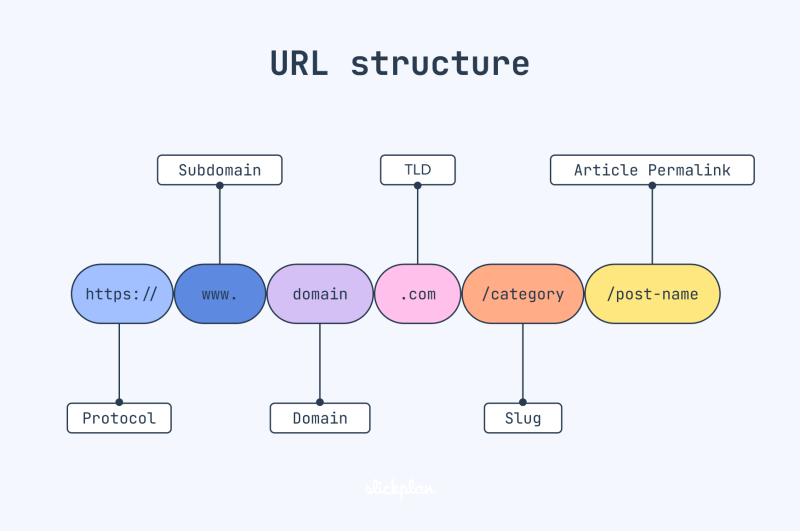
Facebook’s domain ecosystem comprises multiple layers, each optimized for specific use cases. The primary domain, `facebook.com`, serves as the default gateway for desktop and general-purpose access, while subdomains and alternative paths cater to mobile optimization, legacy systems, or specialized features.The root domain (`facebook.com`) and its variants (`www.facebook.com`) are functionally identical, with the latter being a legacy redirect maintained for historical compatibility.Key hierarchical elements include:
Comparison of `facebook.com` and `m.facebook.com`
The primary domain (`facebook.com`) and its mobile counterpart (`m.facebook.com`) differ in technical implementation, performance, and feature availability, reflecting Facebook’s adaptive infrastructure.`m.facebook.com` is not a separate website but a dynamically served version of Facebook’s core platform, optimized for mobile constraints.
| Feature | `facebook.com` | `m.facebook.com` |
|---|---|---|
| Target Device | Desktops, tablets (full-featured) | Smartphones, low-bandwidth connections |
| Page Weight | ~2–4 MB (full JavaScript/CSS) | ~500 KB–1.5 MB (stripped-down assets) |
| Load Time | Slower on mobile networks | Faster on 3G/4G due to reduced payload |
| Feature Support | Full functionality (e.g., Marketplace, Events) | Limited features (e.g., no desktop-like UI) |
| URL Parameters | Supports all parameters (e.g., `?ref=...`) | May drop non-critical parameters for speed |
| Redirect Behavior | Direct access | Redirects to `facebook.com` if user agent detects capability |
| Use Case | Primary access for non-mobile users | Fallback for older devices or legacy browsers |
Facebook URL Parameters and Their Roles
URL parameters in Facebook’s ecosystem serve as tracking mechanisms, sharing triggers, or redirects, often invisible to end users but critical for functionality. These parameters are appended to base URLs (e.g., `facebook.com/story.php?story_fbid=...`) and can influence user behavior, analytics, or platform interactions.Parameters prefixed with `?` or `#` modify the URL’s behavior without altering the core page content, enabling dynamic content delivery.Common parameter categories and examples:
-
Tracking and Referral Parameters
These parameters log user actions for analytics, attribution, or advertising purposes.- `?ref=tsc` – Indicates traffic from a "Top Stories" carousel or tab.
- `?ref=bookmarks` – Tracks access via the "Bookmarks" feature.
- `?ref=br_rs` – Used in referral sharing (e.g., "Shared from [Source]").
- `?ref=share` – Appears when a post is shared externally (e.g., via email or SMS).
-
Content-Specific Parameters
These parameters direct users to specific posts, profiles, or media.- `story_fbid=[ID]` – Links to a specific story/post (e.g., `facebook.com/story.php?story_fbid=123456789`).
- `fbclid=[ID]` – Facebook Click ID, used for cross-device tracking in ads.
- `v=[version]` – Specifies API or feature version (e.g., `v=12.0` for Graph API).
- `source=[source]` – Identifies the source of a shared link (e.g., `source=timeline`).
-
Redirect and Session Parameters
These parameters manage user sessions or force redirects.- `_rdr` – Internal redirect parameter (e.g., `facebook.com?_rdr=p` for profile redirects).
- `_rdc` – Redirect counter for tracking multiple hops.
- `_rdt=[type]` – Specifies redirect type (e.g., `_rdt=1` for login redirects).
-
Legacy and Deprecated Parameters
Some parameters are remnants of older systems or experimental features.- `?sk=welcome` – Redirects to the "Welcome" screen (rarely used today).
- `?refsrc=saved` – Linked to saved posts (now integrated into the main feed).
A shared post URL might appear as:
`https://www.facebook.com/story.php?story_fbid=101583294567890&ref=br_rs&_rdr`
Common Facebook URL Formats and Their Parameters
Facebook’s URLs follow standardized formats for profiles, groups, events, and commercial features, each requiring specific parameters to function. Below is a table summarizing these formats, their purposes, and mandatory parameters.All URLs beginning with `facebook.com` or `www.facebook.com` are interchangeable, but subdomains like `m.facebook.com` may alter parameter handling.
| URL Format | Purpose | Required Parameters | Example |
|---|---|---|---|
| Profile | User personal profile page | `id=[USER_ID]` or `username=[USERNAME]` | `facebook.com/zuck` or `facebook.com/id=1454865` |
| Group | Community group page | `groups/[GROUP_ID]` | `facebook.com/groups/techcommunity` |
| Event | Event registration or details | `events/[EVENT_ID]` | `facebook.com/events/123456789012345` |
| Page (Business) | Business/brand page | `pages/[PAGE_ID]` or `username=[PAGE_NAME]` | `facebook.com/coca-cola` |
| Marketplace Listing | Item for sale in Marketplace | `marketplace/item/[LISTING_ID]` | `facebook.com/marketplace/item/987654321` |
| Post/Story | Shared content (status update, photo, etc.) | `story.php?story_fbid=[POST_ID]` | `facebook.com/story.php?story_fbid=1015000000` |
| Video | Video content | `watch/?v=[VIDEO_ID]` | `facebook.com/watch/?v= |
How Facebook URLs Work in Sharing and Tracking
Facebook URLs serve as dynamic identifiers for posts, profiles, ads, and shared content, integrating tracking mechanisms to analyze user interactions and optimize engagement. These URLs are not static; they incorporate unique parameters to distinguish sources, measure referrals, and facilitate cross-platform sharing. The structure of these URLs reflects Facebook’s dual role as both a social network and a data-driven ecosystem, where every click is logged for analytics and ad targeting. Unlike traditional web links, Facebook URLs often include referral codes, campaign identifiers, and platform-specific redirects, ensuring traceability across devices and external services.The technical architecture behind Facebook’s URL generation leverages a combination of hashing algorithms, session-based tracking, and domain redirection. When a user shares content—whether a post, story, or ad—Facebook constructs a URL that embeds metadata such as the original content ID, user ID, and a unique tracking token. This process ensures that interactions (e.g., clicks, shares, or conversions) can be attributed to specific campaigns or sources, even when shared externally. The system also employs URL shortening services (`fb.me`, `l.facebook.com`) to condense lengthy links while maintaining functionality, distinguishing it from third-party tools like Bitly or TinyURL.
URL Generation for Posts, Stories, and Ads
Facebook generates distinct URL structures for different content types, each incorporating parameters that serve specific tracking or functional purposes. For posts, the URL typically follows the format:https://www.facebook.com/{page_id}/posts/{post_id}
where `{page_id}` identifies the profile or page, and `{post_id}` is a unique alphanumeric hash. For stories, the structure varies slightly:
https://www.facebook.com/story.php?story_fbid={story_id}&id={user_id}
Here, `{story_id}` and `{user_id}` are dynamically assigned to track individual user interactions with ephemeral content.
Ad URLs are more complex, often including campaign-specific parameters such as:
https://www.facebook.com/ads/{ad_id}?ref=br_rs
or for external landing pages:
https://www.facebook.com/l.php?u={encoded_landing_url}&h={hash}&s=1&enc=AZF...
The `ref` parameter (e.g., `br_rs` for "Branded Response") indicates the ad’s source, while the `enc` parameter encodes tracking data such as user session IDs or device fingerprints.
Facebook’s URL generation process involves:
1. Parameter Encoding: Sensitive data (e.g., user IDs or tracking tokens) is hashed or base64-encoded to obscure direct readability while retaining functionality.
2. Dynamic Token Insertion: Temporary tokens (e.g., `?ref=...` or `&h=...`) are appended to links to log interactions in real-time.
3. Platform-Specific Redirects: When shared externally (e.g., via Twitter or email), Facebook redirects users through intermediate domains (`fb.me`, `l.facebook.com`) to maintain tracking while providing a clean, short link.
Technical Process Behind Facebook’s Share Functionality
When a user shares content on Facebook, the platform initiates a multi-step process to construct and distribute the URL, ensuring compatibility across external platforms. The workflow involves:1. Content Identification
Facebook first identifies the type of content being shared (post, photo, video, or link) and retrieves its metadata, including:
2. URL Construction
The platform generates a URL based on the content type:
https://l.facebook.com/l.php?u=https%3A%2F%2Fexample.com%2Fpage&h=AT2...
Here, `u` contains the encoded external URL, and `h` includes a hashed tracking identifier.
3. Parameter Injection
Facebook appends tracking parameters to the URL, such as:
4. Cross-Platform Adaptation
When shared externally (e.g., via email or Twitter), Facebook’s share dialog dynamically adjusts the URL to:
5. Redirect Logic
External links pass through Facebook’s servers, where:
Comparison of Facebook’s URL Shortening with Third-Party Tools
Facebook’s URL shortening mechanism (`fb.me`, `l.facebook.com`) differs from third-party services like Bitly or TinyURL in functionality, scalability, and integration with tracking systems. Below is a comparative analysis:| Feature | Facebook (`fb.me`, `l.facebook.com`) | Bitly/TinyURL |
|---|---|---|
| Primary Purpose | Tracking user interactions and ad performance. | Link management and analytics. |
| Tracking Depth | Integrates with Facebook’s Pixel, Ads Manager, and attribution models. | Offers basic click analytics (e.g., Bitly’s dashboard). |
| URL Structure | Dynamic parameters (e.g., `?ref=...`, `&h=...`) for session tracking. | Static short codes (e.g., `bit.ly/abc123`). |
| Redirect Logic | Multi-step redirection with intermediate servers for data collection. | Direct or single-step redirection. |
| Customization | Limited to Facebook’s branded domains; no custom slugs. | Supports custom vanity URLs (e.g., `bit.ly/facebook`). |
| Scalability | Handles billions of daily interactions via distributed systems. | Optimized for individual or small-business use. |
| Data Retention | Stores long-term analytics tied to user accounts and ads. | Retains data based on subscription tiers. |
| Privacy Controls | Subject to Facebook’s data policies (e.g., GDPR compliance). | Depends on provider’s privacy settings. |
Facebook’s shortening system is not standalone but tightly coupled with its ecosystem. For example, a link shared via `fb.me` may include hidden parameters that log:
In contrast, Bitly or TinyURL prioritize simplicity and portability, making them suitable for non-Facebook use cases where tracking is secondary to link management.
Step-by-Step Guide to Decoding a Facebook URL
Extracting meaningful data from a Facebook URL requires parsing its components, including encoded parameters and hidden tracking tokens. Below is a methodical approach using browser tools or APIs.Tools Required:
Manual Decoding Using Browser Tools
1. Identify the URL TypeDetermine whether the URL is:
2. Extract Base Components
For internal URLs:
https://www.facebook.com/123456789/posts/987654321
- `{page_id}` = `123456789` (Profile/Page ID).
For external redirects:
https://l.facebook.com/l.php?u=https%3A%2F%2Fexample.com%2Fpage&h=AT2...
- `u` = Encoded destination URL (`https://example.com/page`).
3. Decode Encoded Parameters
Use a URL decoder to convert percent-encoded segments:
Security and Privacy Implications of Facebook URLs
Facebook URLs, while functional for sharing and tracking, pose significant security and privacy risks when manipulated or misused. Malicious actors exploit URL structures to deceive users, distribute malware, or steal sensitive data through phishing schemes. Understanding these risks—such as spoofed domains, hidden redirects, and OAuth vulnerabilities—is critical for safeguarding personal and professional interactions on the platform. This section examines real-world tactics employed by attackers, Facebook’s security policies for third-party integrations, and actionable best practices to mitigate exposure.Potential Risks of Untrusted or Manipulated Facebook URLs
Malicious Facebook URLs often leverage social engineering and technical exploitation to compromise user security. Common risks include:- Phishing Attacks: Fraudulent URLs mimic legitimate Facebook pages (e.g., `facebook.com.login.verify`) to steal credentials. These often redirect users to fake login portals that harvest usernames and passwords.
Example of a Phishing URL Structure:
```
https://facebook.com.secure-login-page[.]xyz/login/
```
Notice the subdomain `facebook.com.secure-login-page[.]xyz`, which mimics Facebook’s domain but is not owned by Meta.
Malicious Tactics in Facebook URL Manipulation
Attackers employ several techniques to exploit Facebook’s URL ecosystem, often combining social engineering with technical deception.Common Tactics and Detection Methods:
-
Domain Spoofing
Attackers register domains resembling Facebook’s official URLs (e.g., `faceb0ok[.]com` or `facebook-login[.]net`). These may appear in emails, ads, or shared links.
Detection: Verify the URL’s domain suffix (e.g., `.com` vs. `.xyz`) and hover over links to check the true destination in the status bar or via tools like URLVoid. -
URL Shortening Abuse
Links shortened via services like Bit.ly, TinyURL, or Facebook’s own `fb.me` can obscure malicious destinations. For example:
```
https://fb.me/2A3B4C5D → Redirects to a malware-hosting server.
```
Detection: Use URL expansion tools (e.g., CheckShortURL) or analyze the link’s behavior in a sandbox environment. -
Hidden Redirects via JavaScript or Encoding
URLs containing obfuscated paths (e.g., `%2F` for `/` or `%3F` for `?`) or JavaScript payloads (e.g., `javascript:alert('xss')`) may execute redirects silently.
Example:
```
https://www.facebook.com/trends?ref=js%3Awindow.location%3D%27https%3A%2F%2Fmalicious-site.com%27
```
Detection: Inspect the URL for unusual characters or use browser developer tools to trace redirects. -
Fake Login Prompts
Malicious URLs may prompt users to "verify" their accounts via a fake modal or external page, often mimicking Facebook’s design. These pages collect credentials in real-time.
Example:
```
https://facebook.com/auth/verify?source=external_partner
```
Detection: Compare the URL with Facebook’s official login page (`https://www.facebook.com/login`) and avoid entering credentials outside the primary domain.
Facebook’s URL Policies for Third-Party Integrations
Facebook enforces strict policies for third-party integrations (e.g., OAuth, API access) to mitigate abuse, but gaps remain exploitable. Key policies include:- OAuth 2.0 and API Access:
Facebook requires apps to register with its Developer Platform and adhere to:
- Domain and URL Restrictions:
Example of a Valid OAuth Redirect URI:
```
https://yourapp.com/callback
```
Invalid Example (Open Redirect Risk):
```
https://facebook.com/redirect?url={user_input}
```
Security Measures in Place:
Facebook employs:
HTTPS Enforcement: All API calls and redirects must use HTTPS to prevent MITM attacks. Token Expiration: Access tokens expire after 1–60 days unless refreshed. App Secrets: Client-side secrets (e.g., `app_secret`) are used to verify API requests.
Best Practices for Safely Handling Facebook URLs
Adopting proactive measures minimizes exposure to malicious Facebook URLs in both personal and professional contexts.Checklist for Personal Use:
-
Verify Source Before Clicking
- Check the sender’s profile for authenticity (e.g., official Facebook pages use verified badges).
- Avoid clicking links from unknown contacts or suspicious messages (e.g., "Your account is suspended!").
-
Use URL Inspection Tools
- Extend links via URLScan.io or VirusTotal to detect malware or phishing indicators.
- Browser extensions like uBlock Origin can block known malicious domains.
-
Enable Two-Factor Authentication (2FA)
- Protect accounts with 2FA (e.g., SMS or authenticator apps) to prevent credential theft from phishing URLs.
-
Avoid Logging In via Third-Party Links
- Always navigate to `https://www.facebook.com/login` directly. Never enter credentials on redirected pages.
-
Use Incognito or Private Browsing
- Test suspicious links in incognito mode to avoid cookie-based tracking or malware persistence.
-
Validate Redirect URIs in OAuth Flows
- Ensure all redirect URIs in Facebook’s Developer Portal are whitelisted and use absolute paths (e.g., `https://app.example.com/auth/callback`).
-
Implement Token Binding and Secure Storage
- Store access tokens server-side with encryption and enforce short lifespans.
- Use PKCE (Proof Key for Code Exchange) for public clients to prevent code interception.
-
Monitor API Usage for Anomalies
- Set up alerts for unusual access patterns (e.g., sudden spikes in API calls) via Facebook’s App Dashboard.
-
Educate Teams on Phishing Awareness
- Conduct regular training on recognizing spoofed URLs and reporting suspicious activity to Facebook’s Security Team.
-
Audit Third-Party Integrations
- Regularly review authorized apps in Settings > Apps and Websites and revoke unused permissions.
Customizing and Branding Facebook URLs
Facebook URLs serve as a critical extension of digital identity, enabling brands, organizations, and individuals to create memorable, shareable, and professional online presences. Custom vanity URLs—such as `facebook.com/yourbrand`—replace default numeric or alphanumeric identifiers with human-readable, branded links. This customization enhances recognition, simplifies sharing, and aligns with broader marketing strategies by integrating seamlessly into digital assets like advertisements, email signatures, and physical media. Below, the process of securing custom URLs, their strategic applications, and comparative analysis of Facebook’s URL customization options across Pages, Groups, and Events are explored.Process for Creating Custom Vanity URLs
Facebook’s custom URL feature, known as a vanity URL, allows Pages, Groups, and Events to replace default URLs with branded alternatives. The availability and requirements vary by entity type, with Pages offering the most flexibility. Below are the steps and prerequisites for each:For Facebook Pages:
For Facebook Groups:
For Facebook Events:
Best Practice: Prioritize short, memorable usernames that align with the brand’s primary keyword or name. Avoid hyphens or underscores, as they reduce readability.
Integrating Facebook URLs into Branding Strategies
Custom Facebook URLs function as a cohesive element in omnichannel branding, reinforcing identity across digital and physical touchpoints. Below are key integration methods:1. Digital Asset Integration
Facebook URLs can be embedded into:
Example:
A retail brand (`facebook.com/shopstyle`) might include its vanity URL in:
2. Social Media and Content Marketing
3. Offline and Hybrid Marketing
Creative Uses of Facebook URLs in Marketing Campaigns
Brands leverage custom URLs to drive engagement, track conversions, and create immersive experiences. Below are real-world examples and innovative applications:1. Shortened Links for Tracking
2. Interactive Storytelling
3. Gamified Engagement
4. Localized Campaigns
5. Exclusive Content Gating
Comparison of Facebook URL Customization Options
The table below outlines the key differences between custom URL options for Pages, Groups, and Events, including eligibility, limitations, and use cases.| Feature | Facebook Pages | Facebook Groups | Facebook Events |
|---|---|---|---|
| Eligibility Requirements | 25+ likes, verified Page (for business/brand Pages) | 50+ members, public/private (not secret) | 50+ RSVP’d attendees, public/private (not secret) |
| Username Format | `facebook.com/yourusername` | `facebook.com/groups/yourusername` | `facebook.com/events/yourusername/` |
| Character Limits | No strict limit, but must be unique | Minimum 5 characters | No strict limit, case-insensitive |
| Allowed Characters | Letters, numbers (as part of words), no spaces/symbols | Letters only (no numbers/symbols) | Letters, numbers, no spaces/symbolsTechnical Deep Dive: Facebook’s URL Handling in APIs and Developer Tools
Facebook’s Graph API and developer ecosystem rely on precise URL construction and validation to ensure seamless integration between third-party applications and the platform. URLs serve as the backbone for actions such as posting content, retrieving media, or managing user interactions programmatically. Understanding the technical intricacies—including API endpoint structures, validation rules, and SDK-based URL manipulation—enables developers to automate workflows while adhering to Facebook’s security and performance standards. This section explores the mechanics of URL handling in Facebook’s APIs, from validation protocols to programmatic generation, with practical examples for implementation.Graph API URL Construction for Posts, Comments, and MediaThe Facebook Graph API uses a hierarchical URL structure to interact with objects such as posts, comments, or media. Each endpoint follows a consistent format:`https://graph.facebook.com/{version}/{object-type}/{object-id}?{parameters}` Key components include: For example, creating a post via the API requires a URL like: Programmatic URL Generation Using SDKsDevelopers leverage Facebook’s official SDKs (e.g., Python `facebook-sdk`, JavaScript `facebook-nodejs-business-sdk`) to abstract URL construction and validation. Below are examples for two languages:Python Example (Using `facebook-sdk`): # Initialize API with access token # Generate URL for posting to a page's feed # Execute request (SDK handles URL encoding/validation) JavaScript Example (Using `facebook-nodejs-business-sdk`): const api = new FacebookApi({ // Construct URL for uploading media api.call(mediaUrl, 'POST', formData) Key SDK Features: URL Validation Rules and Common PitfallsFacebook enforces strict validation to prevent abuse and ensure data integrity. Developers must adhere to the following rules:Character and Length Restrictions: Allowed Schemes and Domains: Common Validation Errors: Error Code 100: Invalid parameter (e.g., missing `access_token`). |