Restore deleted text messages using proven technical legal and

Published

restore deleted text messages - Kesimpulan
Table of Contents

Recovering deleted text messages presents a critical challenge for individuals, businesses, and law enforcement agencies alike, where data loss can have irreversible consequences. Whether driven by accidental deletion, device failure, or malicious intent, the ability to retrieve lost communications hinges on a structured understanding of technical recovery methods, legal constraints, and proactive backup strategies. This guide explores the full spectrum of solutions—from leveraging built-in device tools to advanced forensic techniques—while addressing the ethical and compliance risks inherent in message recovery.

The process of restoring deleted messages varies significantly across platforms, ranging from straightforward cloud-based retrieval to complex forensic extraction requiring specialized hardware. For Android users, options include Google Drive backups, third-party software, and command-line tools for rooted devices, each with distinct success rates and operational requirements. Meanwhile, iOS and Windows Phone systems introduce additional layers of encryption and storage management, demanding tailored approaches. Beyond technical execution, legal frameworks like GDPR and local privacy laws impose strict boundaries on data access, while ethical considerations necessitate cautious handling of sensitive communications. By examining preventive measures—such as automated backups and encrypted storage—this discussion also emphasizes the importance of minimizing future data loss risks.

Technical Methods to Retrieve Deleted Text Messages

Deleted text messages can often be recovered using a combination of built-in system tools, third-party software, or advanced command-line techniques. The success of recovery depends on factors such as the device’s storage type (internal/external), operating system, whether the device is rooted/jailbroken, and the time elapsed since deletion. Below are structured methods categorized by technical approach, including their applicability, limitations, and procedural steps.

Recovery Using Built-In Backup Tools on Android

Android devices leverage cloud-based backups via Google Drive or manufacturer-specific tools like Samsung Smart Switch to restore deleted messages. These methods are non-destructive and do not require technical expertise, but they depend on prior backup configurations.

Google Drive SMS Backup Process
Google’s default SMS backup stores messages in a proprietary format and requires manual restoration via a third-party app or ADB commands. The steps are as follows:

1. Verify Backup Existence

  • Navigate to Settings > Google > Backup and confirm SMS backup is enabled.
  • Use the command `adb backup -f sms_backup.ab -apk com.android.providers.contacts com.android.providers.contacts` (requires USB debugging enabled).
  • 2. Restore via Third-Party Apps

  • Apps like SMS Backup & Restore (by Ritesh Sahay) can extract backed-up SMS from Google Drive.
  • Limitations: Only restores messages backed up within the last 30 days (Google’s retention policy).
  • Samsung Smart Switch Recovery
    Samsung devices with Smart Switch can restore SMS from a previous backup if the device was synced before deletion.

    1. Connect Device to PC

  • Install Samsung Smart Switch on Windows/macOS.
  • Select Restore > Messages from the backup file (.smb format).
  • 2. Direct Cloud Restoration

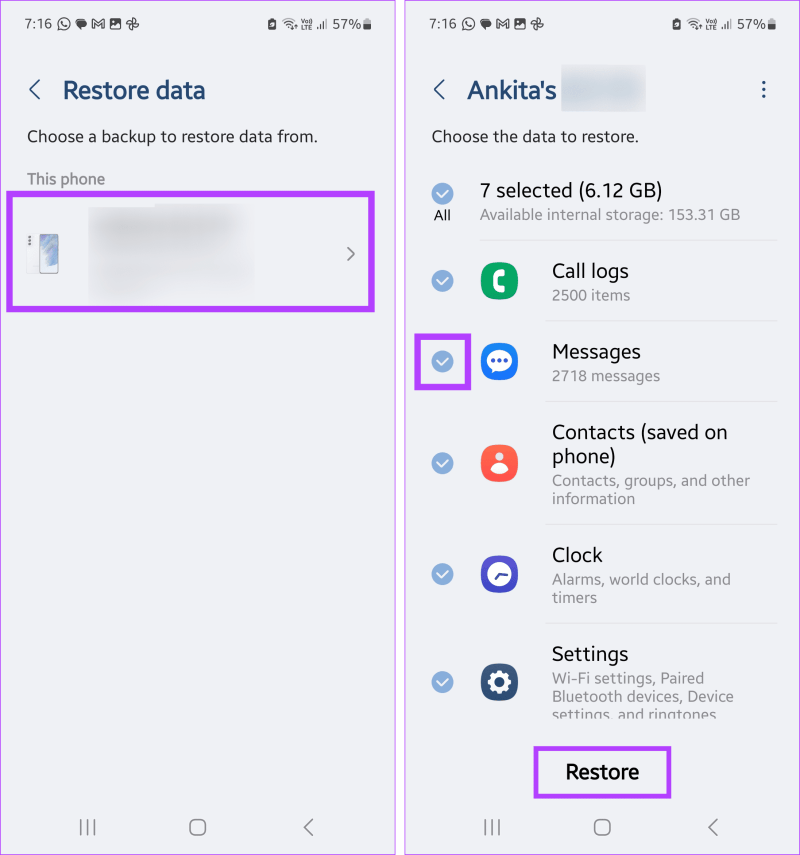
  • If messages were synced to Samsung Cloud, navigate to Settings > Accounts and Backup > Restore Data and select Messages.
  • Key Considerations

  • Success Rate: 80–95% if backups exist and are recent.
  • Requirements: Device must have been backed up; Samsung Cloud requires a Samsung account.
  • Limitations: No granular control over selective restoration; cloud backups may be overwritten.
  • Comparison of Third-Party Recovery Software

    Third-party tools offer deeper extraction capabilities but vary in success rates, system compatibility, and ethical considerations (e.g., root/jailbreak requirements). Below is a structured comparison of leading tools:
    • Dr.Fone – Data Recovery (Wondershare)
      • Success Rate: 70–90% for Android (higher on rooted devices). iOS recovery requires iTunes backup.
      • Supported File Types: SMS (.sms), MMS (.dat), call logs, contacts.
      • System Requirements:
        • Windows/macOS/Linux (Android).
        • Root access for full recovery; otherwise, limited to cloud backups.
      • Limitations:
        • Paid version required for full recovery.
        • May detect as a virus on some antivirus software.
    • EaseUS MobiSaver
      • Success Rate: 65–85% (Android); iOS requires iCloud backup.
      • Supported File Types: SMS (.sms), MMS, WhatsApp messages (if backed up).
      • System Requirements:
        • Windows/macOS.
        • Root access improves recovery chances.
      • Limitations:
        • Free version only scans files; paid version extracts.
        • Slower performance on large storage devices.
    • Tenorshare UltData
      • Success Rate: 75–92% (Android); iOS requires iTunes/Finder backup.
      • Supported File Types: SMS, MMS, WeChat, LINE (if synced).
      • System Requirements:
        • Windows/macOS.
        • Root/jailbreak recommended for direct extraction.
      • Limitations:
        • Paid license required for permanent recovery.
        • Some features (e.g., WhatsApp recovery) require additional steps.
    • DiskDigger (Open-Source Alternative)
      • Success Rate: 50–80% (depends on file fragmentation).
      • Supported File Types: Raw SMS (.sms), MMS (if stored as files).
      • System Requirements:
        • Android (root required) or Windows/macOS (for SD card recovery).
      • Limitations:
        • No GUI for SMS-specific recovery; manual database parsing required.
        • Slower and less reliable for encrypted storage.
    Decision-Making Flowchart for Tool Selection
    The choice between cloud recovery, local extraction, or professional services depends on the following criteria:

    1. Device Status

  • Rooted/Jailbroken? → Use ADB/sqlite3 or third-party tools (Dr.Fone, UltData).
  • Non-rooted? → Rely on cloud backups (Google Drive/Samsung Cloud) or professional services.
  • 2. Data Sensitivity

  • Personal/Work Messages? → Prefer encrypted backups or professional recovery.
  • Non-sensitive? → Third-party tools or open-source options (DiskDigger).
  • 3. Budget Constraints

  • Free Options? → Google Drive restoration or DiskDigger.
  • Paid Tools? → Dr.Fone/EaseUS (one-time purchase).
  • High Budget? → Professional data recovery (e.g., DriveSavers, Kroll Ontrack).
  • 4. Time Sensitivity

  • Immediate Recovery Needed? → Cloud backups or professional services.
  • Time Not Critical? → Third-party software with root access.
  • File Types Containing Deleted Message Data

    Deleted messages are stored in database files or raw text files, depending on the operating system. Below is a categorized list of relevant file types and their typical locations:
    Operating System File Type Database/File Location Description Access Method
    Android .sms /data/data/com.android.providers.telephony/databases/mmssms.db SQLite database storing SMS/MMS metadata and content. Root access + ADB pull or sqlite3 queries.
    .dat (MMS) /sdcard/Telecom/MMS/ Binary files containing MMS attachments (images, videos). Requires hex editing or third-party parsers.
    .xml (Backup) /sdcard/SMS_Backup/ Manual backups created via SMS Backup & Restore app. Extracted via file explorer or ADB.
    iOS .sqlite (SMS) /private/var/mobile/Library/SMS/sms.db SQLite database with message threads, timestamps, and attachments. Message recovery, particularly of deleted text messages, intersects with complex legal frameworks and ethical dilemmas. Retrieval methods often conflict with privacy laws, data protection regulations, and professional standards, requiring careful navigation to avoid legal penalties or reputational damage. Organizations, law enforcement, and individuals must balance investigative needs with compliance obligations, while service providers face distinct responsibilities in managing user data requests. Ethical considerations further complicate scenarios where unauthorized access or misuse of recovered messages may occur, demanding adherence to guidelines that prioritize transparency, consent, and proportionality.

    The legal landscape governing message recovery varies by jurisdiction, with regulations such as the General Data Protection Regulation (GDPR), California Consumer Privacy Act (CCPA), and Electronic Communications Privacy Act (ECPA) imposing strict restrictions on data access and processing. Ethical implications arise when recovery occurs without explicit consent, particularly in workplace investigations or personal disputes, where misuse can lead to defamation, breach of trust, or violation of human rights. Below, structured compliance requirements, case studies, and comparative obligations clarify the boundaries and responsibilities of all stakeholders involved.

    Data protection laws and privacy statutes impose significant limitations on the retrieval and use of deleted messages, with violations carrying severe penalties. Key regulations include:

    - GDPR (EU/EEA): Requires lawful, fair, and transparent processing of personal data. Unauthorized recovery of messages without a legal basis (e.g., consent, legitimate interest, or a court order) constitutes a breach, punishable by fines up to 4% of global annual revenue or €20 million, whichever is higher.

  • CCPA (California, USA): Grants consumers the right to access and delete personal data, while prohibiting businesses from selling or disclosing such data without consent. Recovery of messages for non-compliant purposes may trigger $2,500–$7,500 per violation under California’s privacy laws.
  • ECPA (USA): Restricts government access to electronic communications, requiring warrants for content retrieval unless the data is older than 180 days (stored communications). Civil penalties for unauthorized access range from $1,000 to $5,000 per offense.
  • Local Privacy Laws: Jurisdictions like Brazil (LGPD), India (DPDP Act), and Canada (PIPEDA) enforce similar protections, with fines up to 2% of global revenue or CAD $100,000 per violation, respectively.
  • Service providers, including telecom carriers and cloud storage platforms, must also comply with data retention laws (e.g., EU’s ePrivacy Directive) and cross-border data transfer rules (e.g., Schrems II decision), which restrict how deleted messages can be accessed or shared across jurisdictions.

    Ethical Implications of Unauthorized Message Recovery

    Ethical concerns arise when message recovery occurs without consent, particularly in contexts where trust is paramount—such as employer-employee relationships, legal proceedings, or personal privacy. Key ethical violations include:

    - Invasion of Privacy: Retrieving messages without the subject’s knowledge violates autonomy and informational privacy, as outlined in ethical frameworks like the Fair Information Practice Principles (FIPPs). This is especially critical in workplace monitoring, where employees may reasonably expect personal communications to remain private outside work hours.

  • Misuse of Power: In HR investigations or legal disputes, unauthorized recovery can lead to abuse of authority, particularly if messages are used to coerce, discriminate, or manipulate individuals. For example, recovering deleted messages to terminate an employee without due process may constitute wrongful dismissal or retaliation.
  • Defamation and Reputational Harm: Publicly disclosing recovered messages—even if legally obtained—can result in libel or slander if the content is false or damaging. Courts have awarded damages in cases where recovered communications were used to blackmail or defame individuals (e.g., Hawkins v. PepsiCo, 2009).
  • Professional Misconduct: Legal and IT professionals face bar associations or certification revocations for unethical data handling. The American Bar Association (ABA) Model Rules of Professional Conduct (Rule 1.6) prohibits lawyers from revealing confidential communications without consent, including those obtained through recovery tools.
  • Blockquote: Ethical Guidelines for Message Recovery

    "Ethical recovery of deleted messages must adhere to the principles of necessity, proportionality, and transparency. Consent should be obtained where possible, and recovery efforts should be limited to the minimum necessary to achieve a legitimate purpose. All parties involved—including service providers—must document procedures to ensure accountability and prevent misuse."
    — International Association of Privacy Professionals (IAPP) Best Practices

    Compliance Checklist for Businesses and Law Enforcement

    Organizations attempting to recover deleted messages must follow structured compliance protocols to mitigate legal and ethical risks. Below is a pre-recovery checklist tailored to businesses and law enforcement agencies:

    For Businesses (HR/Legal Teams):

    • Legal Basis Verification: Confirm the recovery aligns with a lawful purpose (e.g., workplace misconduct, fraud investigation) and obtain explicit consent where required. Document the justification in writing.
    • Policy Review: Ensure company data retention policies and employee monitoring agreements comply with local laws (e.g., GDPR’s "right to be forgotten"). Update policies to include deletion procedures and access controls.
    • Third-Party Authorization: If using external forensic tools or service providers, require signed data processing agreements (DPAs) that outline confidentiality, retention periods, and subprocessor restrictions.
    • Transparency with Employees: Notify affected individuals (where legally permissible) that their messages may be accessed, unless doing so would compromise the investigation.
    • Data Minimization: Limit recovery to specific messages or timeframes relevant to the case. Avoid bulk collection of unrelated communications.
    • Secure Storage and Disposal: Store recovered messages in encrypted, access-restricted systems and purge them after the statute of limitations or when no longer needed.
    For Law Enforcement Agencies:
    • Warrant or Court Order: Obtain judicial authorization before accessing messages, except in emergency exceptions (e.g., imminent harm). Document the legal basis for the request.
    • Service Provider Cooperation: Work with telecom carriers or cloud providers under legal process (e.g., SUBPOENA, search warrant). Avoid hacking or unauthorized access, which may violate Computer Fraud and Abuse Act (CFAA).
    • Chain of Custody: Maintain an unbroken chain of custody for recovered evidence, including timestamps, access logs, and hash values to ensure integrity.
    • Privacy Impact Assessment (PIA): Conduct a PIA to evaluate the proportionality of the investigation and mitigate collateral harm to unrelated individuals.
    • Destruction Protocols: Securely delete recovered messages after the case closure or statute of limitations, following departmental retention schedules.
    Scenario: Facebook v. United States (2016) – Warrant Canary Dispute In 2016, the U.S. Department of Justice (DOJ) sought a warrant to access Facebook user messages stored on third-party servers. Facebook resisted, arguing that the Stored Communications Act (SCA) did not apply to messages encrypted in transit. The DOJ later dropped the case after Facebook published a "warrant canary"—a transparency report indicating no government requests had been received. However, the dispute highlighted broader ethical and legal tensions:

    - Legal Outcome: The DOJ’s initial approach was deemed overreaching under the Fourth Amendment, as it sought access without clear jurisdiction over the data’s storage location.

  • Ethical Violations: Facebook’s transparency report raised concerns about government overreach, while the DOJ’s actions were criticized for lack of proportionality in targeting encrypted communications.
  • Regulatory Impact: The case influenced GDPR’s "right to object" provisions, reinforcing that bulk surveillance or unauthorized data requests may violate privacy rights.
  • Lessons Learned:
  • Jurisdictional Clarity: Law enforcement must ensure legal authority over data storage locations (e.g., EU servers require Schrems II compliance).
  • Preventive Measures and Backup Strategies for Text Message Preservation

    Text message loss due to accidental deletion, device failure, or software corruption can result in irreversible data loss if no preventive measures are in place. Implementing structured backup strategies ensures redundancy, accessibility, and security for SMS, MMS, and third-party messaging app data across Android, iOS, and desktop platforms. This section examines automated and manual backup methods, configuration steps for cloud and local storage, encryption protocols, and integrity verification techniques to mitigate risks and optimize recovery potential.

    Automated vs. Manual Backup Methods for SMS/MMS Preservation

    Automated backups minimize human error and ensure consistency by leveraging built-in device features or third-party applications. Manual backups, while more controlled, require periodic intervention and are susceptible to oversight. The choice between methods depends on user priorities—convenience, security, or granular control over data storage.

    Automated Backup Methods
    Automated solutions rely on scheduled syncs or real-time transfers to cloud services or local storage. These methods are ideal for users prioritizing hands-off reliability but may introduce dependency risks if the service provider experiences outages or data breaches.

    Automated backups should include incremental updates to reduce storage overhead and ensure only new or modified messages are archived.
    Manual Backup Methods
    Manual backups provide direct oversight, allowing users to select specific messages or folders for archival. This approach is preferable for sensitive or high-frequency communications but demands discipline to maintain consistency. Common manual techniques include:
  • Exporting messages via third-party apps (e.g., SMS Backup & Restore for Android, iMazing for iOS).
  • Using file transfer protocols (e.g., MTP/PTP for Android) to copy SMS databases directly.
  • Leveraging command-line tools (e.g., `adb pull` for Android, `libimobiledevice` for iOS) to extract raw message databases.
  • Configuring Automatic Backups for SMS/MMS on Android and iOS

    Both Android and iOS offer native cloud-based backup solutions, though configuration varies by device model and OS version. Proper setup ensures seamless archival while troubleshooting common issues like failed syncs or incomplete backups.

    Android: Google Drive SMS Backup
    Android devices store SMS/MMS data in the `/data/data/com.android.providers.telephony/databases/mmssms.db` file, which Google Drive can back up automatically via the SMS Backup & Restore app or native Google One integration.

    1. Prerequisites
      Ensure the device has:
      • Android 4.4 (KitKat) or higher.
      • A Google account linked to the device.
      • Sufficient Google Drive storage (messages consume ~1–5 MB per 1,000 SMS).
      • USB debugging disabled (to prevent unintended data exposure).
    2. Enabling Automatic Backups via SMS Backup & Restore
      1. Install SMS Backup & Restore from the Google Play Store.
      2. Open the app and grant Storage and SMS permissions.
      3. Navigate to Settings > Backup and select:
        • Backup to Google Drive: Enable automatic backups.
        • Backup Frequency: Choose Daily, Weekly, or Manual.
        • Include MMS: Toggle on to back up multimedia messages.
        • Encrypt Backup: Enable for end-to-end security (requires a password).
      4. Test the backup by sending a test message and verifying its presence in Google Drive via drive.google.com under SMS Backup & Restore.
    3. Troubleshooting Failed Backups
      Common issues and resolutions:
      • Error: "Backup failed due to insufficient storage"
        Action: Clear Google Drive cache or upgrade storage plan. Use the command adb shell pm clear com.google.android.apps.docs to force cache clearing (requires USB debugging).
      • Error: "Permission denied"
        Action: Revoke and regrant SMS permissions in Settings > Apps > SMS Backup & Restore > Permissions. For rooted devices, ensure SELinux is not blocking the app.
      • No backup appearing in Google Drive
        Action: Verify the backup folder path in Google Drive (default: /SMS Backup & Restore). Check app logs via adb logcat | grep SMS for errors.
    iOS: iCloud Message Backup
    iOS devices use iCloud to sync messages via the Messages in iCloud feature, which requires iOS 11.4 or later and an active iCloud account. This method backs up messages to Apple’s servers but does not include SMS sent via third-party apps (e.g., WhatsApp, Telegram).
    1. Prerequisites
      • Device running iOS 11.4+.
      • Stable Wi-Fi connection (mobile data may throttle backups).
      • Sufficient iCloud storage (messages occupy ~1–3 MB per 1,000 SMS).
      • iCloud Drive enabled in Settings > [Your Name] > iCloud > Messages in iCloud.
    2. Enabling Automatic Backups
      1. Go to Settings > [Your Name] > iCloud and toggle Messages to ON.
      2. Navigate to Settings > General > iCloud and ensure iCloud Backup is enabled.
      3. Connect the device to power and a Wi-Fi network to initiate an automatic backup (triggered at night by default).
      4. Verify backup status in Settings > [Your Name] > iCloud > Manage Storage > Backups (select the device to view last backup date).
    3. Troubleshooting Failed Backups
      • Error: "iCloud Backup failed (insufficient storage)"
        Action: Free up space by deleting old backups in Settings > General > iCloud > Manage Storage > Backups. Upgrade iCloud storage if necessary.
      • Messages not syncing across devices
        Action: Ensure Messages in iCloud is enabled on all devices. Sign out and back into iCloud on the problematic device.
      • Backup stuck at "Preparing Backup"
        Action: Restart the device and force-quit the Settings app. If persistent, reset network settings (Settings > General > Reset > Reset Network Settings).

    Step-by-Step Guide for Encrypted Local Backups Using VeraCrypt

    Local backups offer offline security but require manual management to prevent data loss from hardware failure. VeraCrypt creates encrypted containers that protect sensitive messages from unauthorized access. Below is a structured approach to setting up and maintaining such backups.

    Prerequisites

    • VeraCrypt installed on Windows, macOS, or Linux (official site).
    • External storage device (USB drive, SSD) with ≥10 GB free space.
    • Strong password (12+ characters, combining uppercase, lowercase, numbers, and symbols).
    • File-naming convention: SMS_Backup_[DeviceModel]_[YYYYMMDD].vc (e.g., SMS_Backup_iPhone13_20240515.vc).
    Step-by-Step Configuration
    1. Create an Encrypted Container
      1. Launch VeraCrypt and select Create Volume. Choose Create an encrypted file container and click Next.
      2. Select Standard VeraCrypt volume and click Next.
      3. Choose a storage location (e.g., external USB drive) and name the file (e.g., SMS_Backup_iPhone13_20240515.vc). Click Save.
      4. Set the volume size (e.g., 20 GB) and select Encryption algorithm (AES-256 recommended for balance of security and performance). Click Next.
      5. Define a strong password and optionally a keyfile (store separately). Click

        Advanced Recovery Techniques for Encrypted or Secure Messages

        End-to-end encrypted (E2EE) messaging platforms, such as Signal, WhatsApp, and Telegram, prioritize user privacy by ensuring only communicating parties can decrypt message content. However, advanced recovery techniques—ranging from metadata extraction to volatile memory analysis—can still uncover traces of deleted messages under specific conditions. These methods require specialized tools, legal authorization, and technical expertise, particularly when dealing with locked devices or forensic-grade extraction. Below, the focus lies on overcoming encryption barriers, bypassing device security, and leveraging forensic tools while addressing the inherent risks of unauthorized access.

        Technical Challenges and Methods for Recovering Encrypted Messages

        End-to-end encryption renders message content inaccessible without the recipient’s cryptographic keys, but metadata and residual data often persist in device storage. Recovery efforts target three primary areas:
        1. Metadata Extraction: Encrypted platforms store timestamps, sender/recipient identifiers, and message sizes in unencrypted databases (e.g., SQLite files on Android or property lists on iOS). Tools like SQLite Browser or MobSF (Mobile Security Framework) parse these files to reconstruct conversation threads, even if messages are deleted.
        2. Keychain and Cache Analysis: Encrypted apps cache session keys or temporary decryption artifacts in device memory or secure enclaves. For example, WhatsApp stores a D92 key in the keychain, which can be extracted via jailbroken iOS or rooted Android using tools like Keychain-Dumper or Frida.
        3. Network Traffic Capture: If messages were synced before deletion, packet sniffing (via Wireshark or tcpdump) may intercept encrypted payloads in transit, though this requires real-time monitoring or access to router logs.

        Limitations: Encrypted messages themselves remain unrecoverable without the private key, but metadata and partial fragments (e.g., failed decryption attempts) may offer investigative leads.

        Bypassing Screen Locks or Passcodes to Access Deleted Messages

        Locked devices present a significant barrier to data extraction, as passcodes or biometric authentication prevent unauthorized access. Bypass methods vary by platform and involve trade-offs between speed, effectiveness, and device integrity.

        Android Unlocking Methods:

      6. ADB/Fastboot Exploits: Tools like Android Unlock or Dr.Fone exploit vulnerabilities in Android’s bootloader to bypass screen locks without user credentials. Success rates depend on device model and security patches.
      7. Samsung Knox Bypass: Knox-restricted devices (e.g., Samsung Galaxy) require Chip-Off or JTAG extraction if software methods fail, as Knox encryption ties data to the device’s hardware.
      8. Risk: Bricking the device or voiding warranty; some methods (e.g., Magisk-based root) may trigger factory resets.
      9. iOS Passcode Bypass:

      10. iCloud Bypass Services: Tools like Checkm8 (exploiting A5-A9 chip vulnerabilities) or iCloud Unlocker (via SIM-swap attacks) can bypass passcodes but require physical access or iCloud credentials. Apple’s Secure Enclave on newer devices (A10+) mitigates these risks.
      11. Forensic Extraction: If the passcode is unknown, physical extraction (e.g., chip-off) becomes necessary, though this destroys the device’s NAND flash.
      12. Legal Risks:

        Unauthorized bypass of authentication mechanisms violates the Computer Fraud and Abuse Act (CFAA) in the U.S. and similar laws globally. Law enforcement agencies must obtain a court order under Rule 41 (U.S.) or equivalent jurisdiction-specific warrants before deploying bypass tools.

        Forensic Tools for Extracting Deleted Messages from Seized Devices

        Law enforcement and digital forensics professionals employ specialized tools to extract data from seized devices, often bypassing encryption through authorized means. Key tools include:
        ToolFunctionalityPlatform SupportLegal Requirement
        Cellebrite UFEDLogical/physical extraction, passcode bypass (via exploits), and decryption of locked devices.iOS/AndroidWarrant or subpoena (varies by region).
        Oxygen Forensic DetectiveAdvanced extraction (including file carving), supports chip-off and JTAG.iOS/Android/Windows PhoneLaw enforcement-grade authorization.
        Elcomsoft Phone BreakerCracks iOS passcodes via brute force or hash extraction; supports iCloud backups.iOS (A5–A11 chips)Legal acquisition of backups required.
        XRY by MSABExtracts data from live devices or backups, including Telegram/Signal metadata.Multi-platformGovernment/corporate forensic use.
        Forensic Workflow:
        1. Acquisition: Physical extraction (via chip-off) or logical dump (if the device is unlocked).
        2. Decryption: Tools like Elcomsoft or Cellebrite decrypt file systems if passcodes are known or bypassed.
        3. Carving: Deleted messages may be recovered from unallocated space using Scalpel or Autopsy.
        4. Analysis: Metadata is cross-referenced with timeline analysis (e.g., Plaso) to reconstruct conversations.

        Hardware Requirements:

      13. JTAG/SWD: Bypasses bootloader for direct memory access (requires soldering).
      14. Chip-Off: Physically removes NAND flash for forensic imaging (destructive).
      15. eMMC Reader: Non-destructive extraction of storage chips for analysis.
      16. Recovering Deleted Messages from Volatile Memory (RAM/Swap Files)

        Deleted messages may persist in volatile memory (RAM) or swap files if the device was not properly shut down. Recovery relies on live forensics techniques:

        RAM Acquisition Methods:

      17. Dumpit: Captures RAM via DMA (Direct Memory Access) on Windows or LiME (Linux Memory Extractor) for Linux/Android.
      18. FTK Imager (Live Acquisition): Extracts RAM from live systems, including encrypted apps’ decrypted state (e.g., WhatsApp session keys).
      19. Volatility Framework: Analyzes RAM dumps to extract artifacts like process memory, network connections, or cached credentials.
      20. Swap File Analysis:

      21. Linux/Android: Swap partitions may contain fragments of deleted messages if the device was low on RAM. Tools like Foremost or PhotoRec carve data from swap files.
      22. iOS: Uses virtual memory (VM) files; extraction requires jailbreak or physical dump via checkm8.
      23. Limitations:

      24. Volatile data is ephemeral; power loss or reboot erases RAM.
      25. Encrypted apps may zero-out memory after use, but memory forensics can still reveal partial plaintext (e.g., Signal’s libsignal-protocol artifacts).
      26. Logical vs. Physical Memory Extraction for Encrypted Messages

        The choice between logical and physical extraction depends on device state, encryption status, and investigative goals.
        MethodDescriptionEffectiveness for Encrypted MessagesHardware/Software Requirements
        Logical ExtractionCopies accessible data (e.g., app databases, backups) without decryption.Low (metadata only; no message content).ADB, iTunes, or forensic tools (e.g., MobSF).
        Physical ExtractionDumps raw storage (NAND flash) via chip-off or JTAG, bypassing OS.High (reconstructs file systems; may recover deleted data).JTAG box, soldering station, Cellebrite UFED Touch.
        Memory DumpCaptures RAM/swap files for volatile data.Moderate (session keys or cached plaintext may persist).FTK Imager, LiME, or DMA tools.
        Hardware Considerations:
      27. JTAG/SWD: Enables direct access to device memory but requires hardware (e.g., Riff Box, CH341A).
      28. Chip-Off: Destructive; removes NAND flash for forensic imaging (used when software methods fail).
      29. eMMC Readers: Non-destructive alternative to chip-off for modern devices (e.g., Alforensics).
      30. Case Example:
        In a 2019 FBI investigation, a seized iPhone X was unlocked via checkm8 exploit, allowing extraction of Signal metadata despite E2EE. The case highlighted the balance between legal authorization and technical feasibility.

        The recovery of deleted text messages is not merely a technical endeavor but a multifaceted process intersecting technology, law, and ethics. While advanced tools and forensic methods can unlock lost data, their application must be balanced against legal and moral responsibilities, particularly in professional or investigative contexts. Proactive strategies, such as regular backups and encryption, remain the most reliable safeguards against irreversible data loss. As digital communication continues to evolve, so too must the approaches to preserving and retrieving critical information—ensuring that both individuals and organizations are equipped to navigate the complexities of message recovery with precision and integrity.

        FAQ

        How can I restore deleted text messages on an Android device?

        If your Android phone uses Google Drive backups, go to Settings > Google > Backup and restore messages via Google One or Messages app backup. For Samsung devices, check Samsung Cloud or Smart Switch. Third-party apps like Dr.Fone or DiskDigger may recover deleted messages if no backup exists, but success depends on storage overwriting.

        What’s the best way to restore deleted text messages on an iPhone?

        Use iCloud Backup (if enabled): Go to Settings > [Your Name] > iCloud > Manage Storage > Backups, tap your iPhone, and restore. For iTunes/Finder backups, connect your iPhone and restore via the software. Without backups, recovery is unlikely unless you use paid tools like Dr.Fone or EaseUS MobiSaver, but they’re not guaranteed.

        Can I restore deleted text messages from Google Messages on Android?

        Yes, if you had Google Messages backup enabled: Open Google Messages, tap your profile > Backup > Restore to retrieve messages from Google Drive. For older backups, go to Settings > Google > Backup in your phone’s settings. Without a backup, recovery isn’t possible unless you used a third-party app before deletion.

        How do I restore deleted text messages on a Samsung phone?

        Check Samsung Cloud: Go to Settings > Accounts and Backup > Samsung Cloud > Restore data. For Smart Switch, use the PC app or another device to restore from backups. If no backup exists, try Dr.Fone or Samsung Data Recovery tools, but success depends on whether messages were overwritten.

        Is there a way to restore deleted text messages directly on a Samsung phone?

        Samsung phones don’t offer a built-in tool to restore deleted messages without a backup. Your best options are Samsung Cloud (Settings > Accounts and Backup) or third-party apps like Samsung Data Recovery (for unbacked-up data). If the storage was overwritten, recovery is impossible.

        How can I restore deleted text messages from iCloud?

        First, ensure iCloud Backup was enabled before deletion: Go to Settings > [Your Name] > iCloud > Manage Storage > Backups, select your iPhone, and tap Restore. If you’re setting up a new iPhone, choose Restore from iCloud Backup during setup. Without a backup, iCloud cannot recover deleted messages.

    restore deleted text messages - Kesimpulan

    restore deleted text messages - Kesimpulan

    Leave a Comment

    Comments are moderated before appearing. The data you submit is processed according to the Privacy Policy of www.linuxunplugged.com.