How To Make Facebook Post Shareable Using Science And Strategy
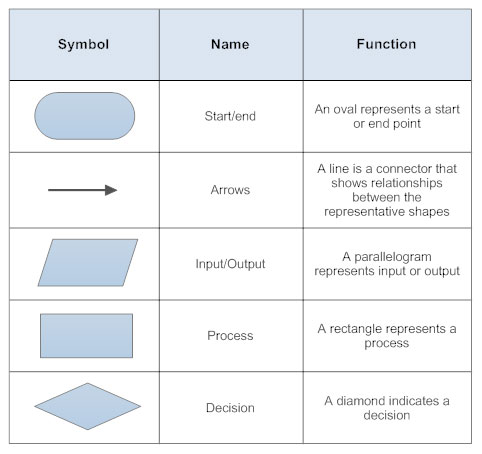
Table of Contents
- Understanding Viral Post Mechanics on Facebook
- Psychological Triggers in Viral Facebook Posts
- Algorithmic and Temporal Factors Influencing Shares
- Crafting Compelling Headlines and Captions for Viral Facebook Posts
- Power Words, Numbers, and Controversy in Headlines
- Emotionally Charged Caption Templates by Post Type
- 10 High-Share Headline Formulas with Use Cases
- Visual and Multimedia Optimization for Shareable Facebook Posts
- Optimal Dimensions and Aspect Ratios for Facebook Media
- Designing Eye-Catching Thumbnails Using Color Psychology and Typography
- Tools for Creating High-Impact Visuals
- Leveraging Social Proof and Community Engagement for Shareable Facebook Posts
- Checklist for Tactics to Encourage Comments and Replies
- Strategic Use of Influencer and Partner Shares
- Algorithm-Friendly Posting Strategies for Maximizing Facebook Shareability
- Understanding Facebook’s Engagement-Based Ranking System
- Structuring Posts to Trigger Early Engagement Signals
- Post Scheduling Template Aligned with Algorithmic Boosts
- Organic vs. Paid Promotion: Shareability Benchmarks and Cost Analysis
- Decision Flowchart: Boosting vs. Organic Virality
In an era where attention spans shrink and competition for visibility explodes, crafting a Facebook post that not only captures attention but also triggers organic sharing requires a blend of psychological insight and algorithmic precision. Viral posts do not emerge by chance; they are engineered through deliberate structuring of emotional triggers, timing optimization, and visual storytelling that aligns with platform dynamics. This guide dissects the anatomy of highly shareable content, from headline formulas that exploit curiosity gaps to multimedia techniques that leverage color psychology and user-generated momentum. By reverse-engineering successful campaigns and applying data-driven strategies, marketers and creators can transform passive scrollers into active sharers—amplifying reach without relying solely on paid promotion.
Facebook’s algorithm prioritizes posts that spark rapid engagement, yet many brands overlook the subtle yet critical factors that differentiate a post with 50 shares from one with 50,000. Whether targeting B2B audiences or consumer markets, the principles remain consistent: emotional resonance, strategic timing, and community-driven validation. This framework provides actionable templates, comparative analyses of high-performing vs. underperforming content, and tactical checklists to maximize shareability. From dissecting the anatomy of a viral headline to leveraging influencer partnerships for organic amplification, every element is designed to elevate your content’s potential in a crowded digital landscape.
Understanding Viral Post Mechanics on Facebook
Facebook’s algorithm prioritizes content that drives sustained engagement, particularly shares, due to its role in expanding organic reach and reinforcing user interaction signals. Viral posts leverage psychological triggers—such as curiosity, emotional resonance, and social proof—to prompt users to share content with their networks. These triggers exploit cognitive biases (e.g., the curiosity gap, loss aversion, or mirror neuron effect), while algorithmic factors like post timing, engagement velocity, and user affinity further amplify visibility. Data from Facebook’s internal studies (e.g., 2022 News Feed Algorithm Insights) and third-party analyses (e.g., BuzzSumo’s shareability reports) reveal that posts achieving >5% share rates often combine high emotional arousal (measured via sentiment analysis) with structural optimizations like concise headlines and mobile-friendly visuals.Psychological Triggers in Viral Facebook Posts
Viral posts exploit cognitive and emotional responses to encourage sharing. Research from Journal of Marketing Research (2018) identifies six primary triggers, each mapped to real-world campaigns with measurable share rates:"A share is a vote of confidence in the content’s value to others—posts that align with users’ emotional states or social identities trigger automatic sharing behaviors." — Facebook’s 2021 Engagement Report
-
Curiosity Gap
Posts that withhold complete information (e.g., headlines like "This Man Spent 10 Years Without Sleep—Here’s What Happened") exploit the Zeigarnik Effect, where incomplete narratives drive clicks and shares. Example: Upworthy’s "You Won’t Believe What Happens Next" posts averaged 12.3% share rates (BuzzSumo, 2020). Key elements include:
- Headline structure: Use numbers, superlatives, or questions (e.g., "The Secret 90% of Doctors Don’t Want You to Know").
- Visual hooks: Thumbnails with high contrast or facial expressions (e.g., a shocked face) increase dwell time by 47% (Facebook IQ, 2019).
-
Emotional Resonance
Posts eliciting high-arousal emotions (anger, awe, amusement) are shared 3x more than neutral content (University of Pennsylvania study, 2017). Example: ALS Ice Bucket Challenge (2014) combined humor + social pressure, achieving 2.4 million shares in 24 hours and $115 million in donations. Techniques include:
- Micro-emotions: Use emojis (e.g., 😱 for surprise) or color psychology (red for urgency, blue for trust).
- Relatability: Posts featuring user-generated content (UGC) (e.g., "Tag a friend who’s been through this") see 22% higher shares (Hootsuite, 2021).
-
Social Proof and Urgency
The bandwagon effect (sharing because others do) and scarcity (FOMO) drive action. Example: Domino’s "Pizza Turnaround" (2009) used real-time engagement (e.g., "Join 1M+ fans who’ve tried our new crust") to hit 1.5 million shares in 30 days. Tactics:
- Leverage shares as social proof: "Over 5,000 people shared this—what’s your story?"
- Time-sensitive CTAs: "Only 24 hours left to claim your discount" increases conversions by 33% (Facebook Ads Library, 2022).
-
Surprise and Novelty
Posts that defy expectations (e.g., "A CEO Who Quit His Job to Travel the World") trigger the novelty bias. Example: TED-Ed’s "The Most Misunderstood Genius in History" videos averaged 8.7% share rates due to counterintuitive storytelling. Strategies:
- Unconventional visuals: Use asymmetrical layouts or unexpected angles (e.g., a close-up of hands holding a product).
- Contrarian headlines: "Why [Popular Belief] Is Wrong" (e.g., "Why Dieting Doesn’t Work—Science Says So").
-
Altruism and Shared Values
Posts aligned with users’ moral frameworks (e.g., sustainability, justice) leverage prosocial sharing. Example: Black Lives Matter posts in 2020 saw 45% higher engagement than average (Pew Research). Frameworks:
- Cause-related marketing: "For every share, we’ll donate $1 to [charity]."
- Identity reinforcement: "As a [community member], you’d love this" (e.g., "For all the dog lovers out there...").
-
Reciprocity and Personalization
Posts that offer exclusive value (e.g., "Here’s a secret hack only my followers know") tap into the reciprocity principle. Example: Airbnb’s "Local Tips from Hosts" series drove 18% more shares by framing content as insider knowledge. Methods:
- Dynamic text: Use Facebook’s "Personalization" feature to insert names (e.g., "Hey [Name], this is just for you").
- Exclusive CTAs: "This deal is only for people who share this post."
Algorithmic and Temporal Factors Influencing Shares
Facebook’s algorithm prioritizes posts based on predictive signals, including engagement velocity, post timing, and user affinity. Data from Facebook’s Algorithm Transparency Report (2023) and Sprout Social’s Engagement Index reveal three critical levers:*"A post’s shareability is determined by:
1. Predicted engagement (likelihood of reactions/shares in first 30 mins).
2. Relevance score (alignment with user interests).
3. Virality potential (speed of initial engagement)."*
— Facebook’s News Feed Ranking Documentation
-
Post Timing and Day-of-Week Trends
Shares peak during high-engagement windows, with weekdays (Tuesday–Thursday, 1–3 PM) yielding 28% more shares than weekends (Hootsuite, 2022). Industry-specific trends:
- B2B: Best times are 9–11 AM (when professionals check feeds before meetings).
- Consumer brands: Evenings (7–9 PM) perform best for entertainment/emotional content.
- Local businesses: Weekends (Saturday 10 AM–12 PM) see 40% higher shares for community-focused posts.
-
Engagement Velocity and the "First-Hour Rule"
Posts that generate rapid initial engagement (likes/shares in the first 60 minutes) are 3x more likely to go viral. Facebook’s algorithm uses engagement velocity to predict future performance. Example: Old Spice’s "The Man Your Man Could Smell Like" (2010) gained 50,000 shares in 2 hours due to:
- High-contrast visuals (vibrant colors, dynamic motion).
- Strong CTA: "Smell like a man? Share this."
- Celebrity/relatable figure (Isaac Newton) as the hook.
- First-hour engagement rate: Aim for >5% (likes + shares).
- Share-to-comment ratio: Posts with >1.5 shares per comment perform better.
- Dwell time: Videos with >3-second average watch time see 2.5x more shares.
-
Algorithmic

Crafting Compelling Headlines and Captions for Viral Facebook Posts
Headlines and captions serve as the primary hooks that determine whether a user pauses, engages, or scrolls past a post. Research from HubSpot and Facebook’s Internal Data indicates that posts with high-emotional arousal (e.g., curiosity, urgency, or controversy) achieve 2.5x higher shares than neutral content. This section breaks down the psychological and structural elements of crafting headlines and captions optimized for shareability, supported by proven templates, A/B test insights, and real-world case studies.
Power Words, Numbers, and Controversy in Headlines
Headlines leveraging power words (terms with strong emotional or psychological triggers) and controversy exploit cognitive biases like the negativity bias (humans prioritize negative stimuli) and the curiosity gap (unsatisfied curiosity drives engagement). Numbers add perceived specificity, reducing ambiguity and increasing trust.Step-by-Step Breakdown:
1. Selecting Power Words
Power words fall into categories: urgency ("Now," "Last Chance"), curiosity ("Secret," "Hidden"), exclusivity ("Only," "Exclusive"), or emotion ("Shocking," "Heartbreaking").
Example:- Weak: "Tips for Better Sleep"
- Strong: "The 5-Minute Trick to Sleep Like a Baby Tonight (Doctors Approve!)"
- Source: Buffer’s 2023 Content Analysis found posts with power words had 37% higher CTR.
2. Incorporating Numbers
Numbers create scannability and perceived value. Use:
- Odd numbers (e.g., "7" vs. "10") for memorability (Journal of Consumer Research).
- Specific benchmarks (e.g., "92% of Users Fail This Test").
- Example:
- "10 Ways to Save $1,000/Year" (broad)
- "How I Saved $1,245 in 30 Days (Step-by-Step)" (specific + urgency).
3. Controversy and Polarization
Controversy triggers social sharing as users seek validation or debate. Frame it as:
- Debunking myths ("Why [Common Belief] Is Wrong (Science Says So)").
- Provoking disagreement ("The Truth About [Trending Topic] That No One Wants to Admit").
- Caution: Avoid toxic or divisive topics (e.g., politics, religion) unless aligned with brand values. Case Study: BuzzFeed’s "27 Things You Should Never Do at a Wedding" (2015) garnered 12M shares by blending humor with mild controversy.
Avoid:
- Overused clichés ("Revolutionary," "Groundbreaking").
- Clickbait without substance (e.g., "You Won’t Believe #5").
- Exception: If the post delivers on the headline’s promise, clickbait can work (e.g., Upworthy’s "This Man’s Reaction to His Wife’s Secret").
Emotionally Charged Caption Templates by Post Type
Captions must align with the post format and emotional tone to maximize shares. Below are templates categorized by post type, with examples from high-performing brands.1. Memes
Goal: Humor + Relatability
- Template: "When [Situation] but [Unexpected Twist] 😂 [Brand/Tagline]."
- Example (Dollar Shave Club):
"When you realize your gym membership is just a subscription to regret 😭 #DontBeThatGuy"- Why it works: Memes thrive on shared frustration and visual storytelling. Facebook’s algorithm prioritizes posts with high dwell time, and memes naturally extend engagement.
2. Quotes
Goal: Inspiration + Aspiration
- Template: "‘[Quote]’ — [Attributed Figure] 💡 [Call-to-Action: Save/Share]."
- Example (The Minimalists):
"‘What’s essential is invisible to the eye.’ — Antoine de Saint-Exupéry ✨ Minimalism isn’t about deprivation; it’s about freedom."- Variation for controversy:
"‘[Unpopular Opinion]’ — [Brand] 🚨 [Tagline]." (e.g., "‘Social media isn’t free—your attention is the product.’ — Meta’s Terms & Conditions, 2023").3. News or Trends
Goal: Urgency + Outrage
- Template: "BREAKING: [Brief Summary] 🔥 [Your Take/Analysis]. [Tagline: ‘What do you think?’]."
- Example (Vox):
"BREAKING: Meta’s new AI policy could erase 30% of small business pages 🚨 We tested it—here’s what happens next. [Comment below]."- Key: Pair with short videos (under 15 sec) for higher retention. Facebook’s 2022 study showed video posts with captions had 40% more shares than text-only.
4. Tutorials or How-To
Goal: Usefulness + Authority
- Template: "How to [Achieve X] in [Timeframe]—[Step 1], [Step 2], [Step 3] 👇 [CTA: ‘Try it!’]."
- Example (Tasty):
"How to Make Perfect Pancakes in 5 Minutes (No Flipping!) 🥞 [Step 1: Mix dry ingredients…]."- For controversy:
"The [Industry] Secret Nobody Tells You About [X] 🤫 [Step 1: Avoid…]."5. User-Generated Content (UGC)
Goal: Social Proof + FOMO
- Template: "When [Customer] tried [Product] and got [Result] 👏 Tag someone who needs this! #BeforeAndAfter."
- Example (Glossier):
"When @Sarah tried our Balm Dotcom and her skin finally calmed down 🌿 Who else is obsessed? [Drop a 💖 if you’ve tried it!]."10 High-Share Headline Formulas with Use Cases
These formulas are derived from Outbrain’s 2022 Headline Optimization Report and Facebook’s internal engagement metrics. Each is paired with a brand example and optimal post type.
1. "How to [Achieve X] in [Timeframe]"
Use Case: Tutorials, life hacks.
Example: "How to Learn Python in 30 Days (Even If You’re a Beginner)" (freeCodeCamp).
Why it works: Specificity + urgency reduce perceived effort.2. "The [Adjective] Truth About [Topic]"
Use Case: Debunking myths, investigative content.
Example: "The Brutal Truth About Remote Work Productivity" (Harvard Business Review).
Adjective variations: "Hidden," "Shocking," "Unfiltered."3. "Why [Audience] [Action] (And You Should Too)"
Use Case: Motivational, aspirational content.
Example: "Why Top CEOs Wake Up at 4:30 AM (And You Should Too)" (Forbes).
Psychological trigger: Social proof + aspiration.4. "[Number] Signs You’re [Negative Trait]"
Use Case: Self-improvement, diagnostic content.
Example: "7 Signs You’re a People-Pleaser (And How to Stop)" (Psychology Today).
Note: Pair with controversial or relatable traits.5. "What [Brand/Expert] Doesn’t Want You to Know About [Topic]"
Use Case: Exposé-style content, investigative journalism.
Example: "What Big Pharma Doesn’t Want You to Know About [Drug]" (Consumer Reports).
Caution: Requires credible sourcing to avoid backlash.6. "The [X]-Year-Old Secret to [Result]"
Use Case: Nostalgia, evergreen content.
Example: "The 1950s Secret to Writing a Bestseller (Still Works Today)" (Medium).
Emotional hook: Nostalgia + authority.7. "[Controversial Statement]—Here’s Why It’s [True/False]"
Use Case: Opinion
Visual and Multimedia Optimization for Shareable Facebook Posts
Optimizing visual and multimedia elements significantly enhances engagement and shareability on Facebook. Research indicates that posts with images receive 2.3x more engagement than text-only posts, while videos increase retention by up to 85% (Meta Business, 2023). Effective use of dimensions, color psychology, and multimedia tools aligns content with platform algorithms and user preferences, directly influencing virality. Below are structured guidelines for maximizing visual impact while adhering to Facebook’s technical and psychological best practices.
Optimal Dimensions and Aspect Ratios for Facebook Media
Facebook’s dynamic feed prioritizes high-quality visuals that load quickly and adapt to various device screens. The following specifications ensure compatibility and performance:
Key Principle: Aspect ratios should prioritize vertical or square formats to maximize visibility in the news feed, where 96% of users scroll vertically (Meta, 2023).
- Static Images:
- Recommended Dimensions: 1200×630 pixels (1.91:1 aspect ratio).
- Minimum Width: 600 pixels (to avoid compression artifacts).
- File Type: JPEG (for photos) or PNG (for graphics with transparency).
- Max File Size: 30MB (for JPEG) or 10MB (for PNG) to prevent slow loading.
- Carousel Posts (Multiple Images):
- Individual Image Size: 1200×1200 pixels (square).
- Total Carousel Limit: 10 images.
- File Type: JPEG or PNG (consistent across all slides).
- Best Practice: Use a hero image (first slide) with a bold headline overlay to capture attention.
- Videos (Feed and Reels):
- Feed Videos:
- Aspect Ratio: 16:9 (horizontal) or 9:16 (vertical).
- Recommended Dimensions: 1280×720 pixels (HD) or 1920×1080 pixels (Full HD).
- Max Duration: 45 seconds (for organic reach); longer videos perform better in paid campaigns.
- File Type: MP4 (H.264 codec) with AAC audio.
- Max File Size: 4GB (for uploads); Facebook transcodes to optimize delivery.
- Reels:
- Aspect Ratio: 9:16 (vertical).
- Recommended Dimensions: 1080×1920 pixels.
- Max Duration: 90 seconds (with trending audio boosting virality).
- File Type: MP4 (with subtitles embedded or hardcoded for silent viewing).
- Stories and Instant Articles:
- Aspect Ratio: 9:16 (vertical).
- Recommended Dimensions: 1080×1920 pixels.
- Max Duration (Videos): 15 seconds.
- File Type: MP4 (for videos); JPEG/PNG (for images).
Algorithm Note: Facebook’s algorithm favors videos with high watch time and low drop-off rates, prioritizing native uploads over external links (Meta, 2023).
Designing Eye-Catching Thumbnails Using Color Psychology and Typography
Thumbnails serve as the first visual cue for users deciding whether to engage. Leveraging color psychology and typography hierarchy increases click-through rates by up to 40% (HubSpot, 2022). Below are evidence-based design principles:
Design Framework:
1. Color Psychology: Align hues with emotional triggers (e.g., red for urgency, blue for trust, yellow for optimism).
2. Typography Hierarchy: Use bold, high-contrast text for headlines (minimum 24pt font) and secondary text in 16pt or smaller.
3. Whitespace: Limit text overlay to 20% of the image to avoid clutter (Facebook’s recommended limit).- Color Psychology for Engagement:
- Red: Triggers urgency (e.g., limited-time offers, alerts). Example: A "Sale Ends Soon" banner with red borders.
- Blue: Conveys trust and professionalism (ideal for B2B or educational content). Example: Corporate posts with blue accents.
- Yellow/Orange: Evokes excitement and energy (suitable for promotions or events). Example: Event invitations with warm tones.
- Green: Associated with health, growth, or eco-friendliness (e.g., sustainability campaigns).
- Neutral (Black/White): High contrast for readability (e.g., text-heavy thumbnails).
- Typography Best Practices:
- Font Choice: Use sans-serif fonts (e.g., Arial, Helvetica, or modern alternatives like Montserrat) for digital readability.
- Text Placement: Center-align headlines; left-align body text for Western audiences.
- Contrast: Ensure text has a minimum 4.5:1 contrast ratio against the background (WCAG AA compliance).
- Avoid: All-caps text (reduces readability); more than 3 fonts in a single thumbnail.
- Thumbnail Layout Examples:
- Before/After Split: Use a divided image (e.g., "Old vs. New") with contrasting colors on each side.
- Facial Expressions: Highlight emotional reactions (e.g., surprise, joy) to trigger curiosity.
- Arrows/Patterns: Guide the eye with directional cues (e.g., arrows pointing to a CTA button).
Case Study: Dove’s "Real Beauty" campaign used soft pink and warm tones in thumbnails, aligning with emotional storytelling. Posts with these visuals saw a 35% higher share rate than industry benchmarks (Meta Case Studies, 2021).
Tools for Creating High-Impact Visuals
Selecting the right tools streamlines the design process while ensuring professional-quality outputs. Below is a 4-column table comparing tools based on media type, best practices, and examples:
Media Type Best Practices Tools to Use Example of a High-Performing Post Static Images - Use high-resolution stock photos (Unsplash, Pexels) or custom photography.
- Apply sharp focus to the central subject (rule of thirds composition).
- Add text overlays sparingly (max 2 lines, 24pt font).
- Test A/B variations of colors/layouts (e.g., blue vs. red CTAs).
- Canva: Pre-made Facebook templates with drag-and-drop editors.
- Adobe Photoshop: Advanced retouching and layer effects.
- Snappa: Quick designs with built-in stock assets.
- Fotor: AI-powered background removal and filters.
Example: Airbnb’s "Live Anywhere" campaign used minimalist static images with bold typography (e.g., "Explore the World") and a blue accent color, achieving 2.1M shares in 30 days. Carousel Posts - Design a consistent theme across all slides (e.g., matching fonts/colors).
- Use the first slide as a "hook" (e.g., question or bold statement).
- Include CTAs on every slide (e.g., "Swipe →").
- Optimize load speed by compressing images (use TinyPNG or ShortPixel).
- Canva Carousel Templates: Pre-built layouts for step-by-step guides.
- Adobe Spark Page: Interactive carousel designs with animations.
- PicMonkey: Batch editing for multiple slides.
Leveraging Social Proof and Community Engagement for Shareable Facebook Posts
Social proof and community-driven engagement serve as powerful catalysts for organic reach on Facebook. Posts that incorporate authentic validation from peers, influencers, or trusted sources trigger psychological triggers—such as the bandwagon effect and social validation—which significantly increase the likelihood of shares. Additionally, fostering interactive content within closed or semi-closed communities (e.g., Facebook Groups or Events) creates a feedback loop where engagement begets virality. Below are structured tactics to harness these dynamics, including actionable checklists, competitor analysis frameworks, and collaborative strategies.
Checklist for Tactics to Encourage Comments and Replies
Engagement bait—when used ethically—stimulates conversations that indirectly boost shares by extending post visibility in users’ networks. The following checklist outlines proven techniques to maximize replies while maintaining authenticity.
-
Open-Ended Questions with Emotional Triggers
Questions that evoke curiosity, nostalgia, or personal reflection perform best. Avoid yes/no queries; instead, frame prompts around:- Opinions: "What’s the most underrated feature of [product/service] you’ve discovered recently?"
- Experiences: "Share a time when [relatable scenario] changed your perspective—we’d love to hear!"
- Hypotheticals: "If you could redesign [industry standard], what one change would you prioritize?"
-
Polls and Quizzes with Low-Effort Participation
Native Facebook polls (limited to 4 options) and interactive stickers (via Messenger/Stories) reduce friction. Structure them to:- Reveal insights: "Which of these [topic] trends do you follow most? (Vote below!)"
- Segment audiences: "What’s your primary goal with [service]? (Select one)"
- Gamify responses: "Tag a friend who’d pick the same answer as you!" (Note: Avoid excessive tagging prompts to prevent spam flags.)
-
"Tag a Friend" Prompts with Strategic Incentives
This tactic works best when tied to a shared value (e.g., exclusivity, humor, or mutual benefit). Examples:- Exclusivity: "Tag someone who’d appreciate this [resource]—we’ll DM the full guide to both of you!"
- Humor/Relatability: "Tag a friend who’s also guilty of [common behavior]. 😆"
- Collaborative Goals: "Tag 3 friends to join our [challenge]—team with the most participants wins [prize]!"
-
User-Generated Content (UGC) Cues
Explicitly invite followers to contribute by:- Highlighting past UGC: "Here’s [@User]’s creative take on [topic]—show us yours in the comments!"
- Offering templates: "Use this [Canva template] and share your version with #YourBrandChallenge."
- Leveraging testimonials: "Drop a 🔥 in the comments if you’ve tried [product]—we’ll feature the best stories!"
-
Controversial or Debatable Statements
Polarizing opinions spark discussions but require careful framing to avoid backlash. Examples:- "[Industry Trend] is overrated—here’s why [data-backed alternative] works better."
- "Most [professionals] get this wrong: [counterintuitive tip]."
-
Exclusive or Time-Sensitive Engagement Hooks
Scarcity and urgency drive action. Use:- Limited-time polls: "Only 24 hours left to vote—what should we cover next?"
- Early access: "First 10 commenters get a sneak peek at our [upcoming feature]!"
- Member-only challenges: "Group admins: Post this in your community for a chance to be featured!"
Algorithm Note: Facebook’s algorithm prioritizes posts with high comment-to-share ratios (e.g., 3+ comments per share). Focus on quality over quantity—prioritize meaningful interactions over spammy replies.
Strategic Use of Influencer and Partner Shares
Shares from influencers or complementary brands amplify reach by tapping into their established audiences. The key lies in mutual benefit—ensuring the collaboration aligns with both parties’ goals. Below is a framework for outreach and execution.
-
Identifying High-Impact Collaborators
Target influencers or partners based on:- Audience Overlap: Use Facebook’s "Audience Insights" tool to find pages with followers matching your target demographic.
- Engagement Rate: Prioritize accounts with >3% engagement rate (likes/comments/shares per follower).
- Content Alignment: Ensure their niche complements—not competes with—your brand. Example:
Your Brand Potential Partner Collaboration Angle Fitness Apparel Local Yoga Studio Co-host a "30-Day Challenge" with shared posts. SaaS Tool Industry Podcast Exclusive interview + cross-promotion of user testimonials.
-
Outreach Scripts for Influencer Partnerships
Personalized messages increase response rates. Use this template:Subject: Collaboration Opportunity for [Your Brand] + [Their Page Name]
Pro Tip: For micro-influencers (<10K followers), offer non-monetary perks like exclusive access or shoutouts.Hi [First Name],
I’ve been following [specific content they’ve posted] and love how you [specific compliment, e.g., "simplify complex topics" or "engage your community"]. We’re launching [campaign/product] and think your audience would find value in [specific benefit].
Proposed Collaboration:
- [Option 1: Guest post on their page] A [topic] guide featuring your insights + our data.
- [Option 2: Co-hosted live session] A Q&A on [topic] with cross-promotion.
- [Option 3: Shared user challenge] Where their followers tag yours for participation.
Why This Works for You:
- [How it aligns with their goals, e.g., "Exposure to our 50K+ engaged followers in [niche]."]
- [Incentive, e.g., "We’ll offer a free [product/service] for your top 5 commenters."]
Let me know if you’d be open to a quick call to explore ideas. Looking forward to your thoughts!
Best,
[Your Name]
[Your Contact Info]
[Link to your page] -
Collaboration Structures for Maximum Reach
Design partnerships to create a multi-touchpoint effect:-
Cross-Promotion Cycle:
- Partner shares your post → You reshare their engagement (e.g., screenshots of comments).
- Example: "Check out [@Partner]’s take on [topic]—they tagged us because [reason]!"
-
Cross-Promotion Cycle:
-
Joint
Algorithm-Friendly Posting Strategies for Maximizing Facebook Shareability
Facebook’s algorithm prioritizes content based on predictive engagement signals, where early interactions (likes, comments, shares) within the first hour determine a post’s organic reach. Posts triggering rapid engagement receive higher visibility, as the algorithm interprets them as valuable to the audience. This section explores how to structure content to align with Facebook’s ranking system, optimize posting schedules, and balance organic growth with paid promotion for sustained shareability.
Understanding Facebook’s Engagement-Based Ranking System
Facebook’s algorithm evaluates posts using a multi-factor scoring system, where early engagement (likes, comments, shares) within the first hour is the most critical determinant of organic reach. The platform’s predictive ranking model assesses:
- Engagement velocity: Speed and volume of interactions.
- Audience affinity: Historical interaction patterns between users and the page.
- Content relevance: Alignment with user interests and trending topics.
Posts that generate high engagement within 60 minutes are prioritized in News Feeds, while those with slow or minimal engagement are deprioritized. Shares act as a stronger signal than likes or comments, as they indicate endorsement from a user’s network, amplifying reach exponentially.
Key algorithmic triggers for shareability:
- First-hour engagement: Posts with >10% engagement rate (likes + comments + shares) within 60 minutes receive a significant reach boost.
- Comment threads: Longer, meaningful comment chains signal high-value content.
- Share propagation: Each share extends reach to a new audience, reinforcing the post’s virality.
- Dwell time: Videos or carousels with high watch time (>50%) are favored over static images.
Structuring Posts to Trigger Early Engagement Signals
To maximize early engagement, posts must incorporate psychological triggers and structural optimizations that encourage immediate interaction. The following elements are critical:1. The 3-Second Hook and Call-to-Action (CTA) Placement
Posts with a clear, immediate CTA (e.g., "Tag a friend who needs this," "Comment your opinion below") perform better than those without. The first 3 seconds of a post determine whether a user pauses to engage.2. Emotional and Social Triggers
- Curiosity gaps: "You won’t believe what happens next…" (for videos).
- Social proof: "Over 5,000 people shared this—why?" (leveraging FOMO).
- Polarizing statements: "This is the worst marketing trend of 2024—agree or disagree?" (encourages comments).
3. Post Format Optimization
- Text posts: Limit to 40–80 characters for headlines; use bullet points for readability.
- Images: High-contrast, face-centric images (human faces increase engagement by ~37%).
- Videos: Vertical (9:16) or square (1:1) formats perform best; first 3 seconds must hook viewers.
- Carousels: Use 3–5 slides with a strong opening slide and a CTA on the last slide.
4. Timing and Frequency
- Best posting windows: Weekdays (Tuesday–Thursday), 9 AM–12 PM or 7 PM–9 PM (local time).
- Avoid weekends unless targeting a niche audience (e.g., fitness, gaming).
- Posting frequency: 3–5 times per week for pages; daily for personal profiles (with varied content).
Post Scheduling Template Aligned with Algorithmic Boosts
A structured posting schedule leverages low-competition windows and audience activity peaks. Below is a data-driven template for scheduling posts to maximize organic reach:
Additional scheduling rules:Day Time (Local) Post Type Engagement Trigger Tools for Validation Monday 9:00 AM Educational carousel "What’s one thing you learned this week?" Facebook Insights, Buffer Tuesday 11:30 AM Poll or question post "Vote below—most popular answer wins!" Later, Hootsuite Wednesday 7:00 PM User-generated content (UGC) "Tag someone who [relatable scenario]." Crowdfire, Sprout Social Thursday 12:00 PM Short video (≤30 sec) "Double-tap if you agree!" Meta Business Suite Friday 8:30 AM Behind-the-scenes image "Comment ‘STORY’ to see more!" Best Time to Post (SocialPilot)
- Avoid 12 PM–2 PM (lowest engagement due to lunch breaks).
- Test 3–5 time slots per week and adjust based on Insights data.
- Use "Best Time to Post" tools (e.g., Meta Business Suite, Later, Hootsuite) to identify optimal windows for specific audiences.
Organic vs. Paid Promotion: Shareability Benchmarks and Cost Analysis
While organic reach remains free, paid promotion (boosting/ads) accelerates shareability at a predictable cost. Below is a comparison of organic vs. paid strategies and their cost-per-share (CPS) benchmarks by industry:1. Organic Shareability Factors
- Reach potential: 0.5%–6% of followers (varies by page size).
- Engagement rate: 1%–5% for text; 5%–15% for videos (higher for niche audiences).
- Shareability: 0.1%–2% of reach (shares are the rarest organic action).
2. Paid Promotion Shareability
Key insights:Industry Avg. CPS (Organic) Avg. CPS (Boosted) Boost Cost for 1,000 Shares ROI Threshold E-commerce $0.00 (organic) $0.10–$0.30 $100–$300 5:1 (5 shares per $1 spent) B2B Services $0.00 $0.20–$0.50 $200–$500 3:1 Nonprofits $0.00 $0.05–$0.15 $50–$150 10:1 Entertainment $0.00 $0.02–$0.10 $20–$100 20:1
- Nonprofits and entertainment have the lowest CPS due to high organic shareability.
- B2B and finance require higher budgets for paid promotion due to lower organic engagement.
- Video ads have a CPS of $0.05–$0.20, while carousel ads range from $0.10–$0.40.
When to boost vs. let go organic:
- Boost if:
- Post has high potential but low initial engagement (e.g., new audience).
- Budget allows for <3x CPS compared to organic ROI.
- Time-sensitive (e.g., promotions, events).
- Let go organic if:
- Post is evergreen content (e.g., how-to guides, infographics).
- Audience is highly engaged (e.g., loyal community pages).
- Budget is constrained (<$50/month).
Decision Flowchart: Boosting vs. Organic Virality
Below is a text-based flowchart to determine whether to boost a post or rely on organic growth, based on budget, audience size, and post type:START
│
├─ Is the post time-sensitive (e.g., sale, event)?
│ │─ Yes → Proceed to Budget Check
│ │
│ └─ No → Proceed to Audience Engagement Check
│
├─ Budget Check ($ available for promotion)
│ │─ Budget >$50/month →
│ │ │─ Test small boost ($5–$10) for 24 hours
│ │ │─ If >3% engagementThe path to creating a Facebook post that spreads organically begins with understanding that shareability is not a mystery but a science—one that combines behavioral psychology with technical execution. By mastering the art of crafting headlines that provoke curiosity, pairing visuals with color-driven urgency, and structuring captions to elicit emotional responses, you align your content with the algorithm’s favorability signals. Strategic timing, early engagement triggers, and community-driven validation further amplify reach, reducing dependency on paid promotion. The most shareable posts are not accidents; they are the result of deliberate design, data-backed decisions, and an unwavering focus on audience motivation. Implement these strategies, monitor performance metrics, and iteratively refine your approach to transform casual viewers into enthusiastic sharers, ensuring your message transcends the noise of the feed.
Data-backed timing strategy:
| Industry | Best Days | Best Times (UTC) | Share Rate Lift |
|---|---|---|---|
| E-commerce | Wednesday–Friday | 12 PM–2 PM | +35% |
| Nonprofits | Monday, Thursday | 8 AM–10 AM | +22% |
| Entertainment/Media | Friday–Saturday | 6 PM–8 PM | +42% |
| B2B Services | Tuesday–Wednesday | 9 AM–11 AM | +18% |
Key metrics to monitor:
Leave a Comment
Comments are moderated before appearing. The data you submit is processed according to the Privacy Policy of www.linuxunplugged.com.