how to change payment method on amazon effectively and securely

Table of Contents
- Step-by-Step Guide for Changing Payment Method on Amazon
- Desktop Procedure for Updating Payment Method
- Mobile App Procedure for iOS and Android
- Common Errors and Troubleshooting
- Supported Payment Methods on Amazon and Their Compatibility
- Overview of Amazon-Accepted Payment Methods and Regional Availability
- Comparison of Payment Methods: Setup Time, Security, and Fees
- Process for Adding a New Payment Method
- Handling Payment Method Failures and Automated Error Messages
- Troubleshooting Common Issues When Updating Payment Methods on Amazon
- Common Errors and Step-by-Step Resolutions
- Error 1: Payment Method Not Updating
- Error 2: Invalid Card Details
- Error 3: Unsupported Payment Method
- Security Best Practices for Managing Payment Methods on Amazon
- Amazon’s Security Measures for Payment Updates
- Checklist for Secure Payment Method Management
- Recognizing Phishing Attempts Targeting Payment Updates
- Revoking Access to Saved Payment Methods
- Regional Variations in Payment Method Updates on Amazon
- Unique Payment Methods by Region and Their Setup Processes
- Comparative User Experience: Strict Regulations vs. Flexible Systems
- Localized Step-by-Step Guides for High-Traffic Regions
Updating your payment method on Amazon ensures seamless transactions while maintaining security and compliance with regional policies. Whether you rely on credit cards, digital wallets, or bank transfers, navigating this process efficiently minimizes disruptions to your shopping experience. This guide provides a structured approach to modifying payment details, troubleshooting errors, and adhering to best practices for fraud prevention, tailored for both desktop and mobile users.
From verifying new payment sources to resolving declined transactions, each step is designed to align with Amazon’s security protocols while accommodating regional variations. Whether you operate in the U.S., Europe, or Asia, understanding supported methods—such as PayPal, Amazon Pay, or local options like iDEAL—is critical for avoiding interruptions. Additionally, proactive measures like enabling two-factor authentication and recognizing phishing attempts further safeguard your financial information during updates.
Step-by-Step Guide for Changing Payment Method on Amazon
Updating the payment method associated with an Amazon account ensures seamless transactions and aligns billing with current financial preferences. This guide provides a structured approach for desktop and mobile users, including security validations, verification methods, and troubleshooting for common errors. Follow the procedures below to modify payment details securely while maintaining account integrity.Desktop Procedure for Updating Payment Method
Amazon’s desktop interface requires users to log in with verified credentials before accessing payment settings. The process involves navigating through account security layers, such as two-factor authentication (2FA) if enabled, before confirming changes. Below is a detailed table outlining each step, including visual cues and security checks:| Step | Icon | Action | Description |
|---|---|---|---|
| 1 | 🔒 | Log in to Amazon |
Access Amazon’s official website and enter registered email/phone and password. If 2FA is enabled, complete the verification via SMS, app (e.g., Google Authenticator), or hardware key.Note: Use a secure, private browser (e.g., Chrome Incognito) to prevent unauthorized access. |
| 2 | 🔄 | Navigate to Account Settings | Click the Account & Lists icon (depicted as a person silhouette) in the top-right corner. Select Your Orders from the dropdown menu, then choose Account Settings in the left sidebar. |
| 3 | 💳 | Access Payment Methods | Under the Payment and Shipping section, select Payment Settings. This page lists all saved payment methods, with the primary method highlighted. |
| 4 | ✏️ | Edit or Add New Payment Method |
To replace the primary method, click Edit next to the current card. For a new card, select Add a Payment Method and choose Credit or Debit Card.Security Check: Enter the full card number, expiration date, and CVV (3- or 4-digit code on the back). Amazon does not store CVV for security; it is used only for verification. |
| 5 | 🔐 | Verify with 3D Secure (if required) | Some banks initiate an additional verification step (e.g., sending a one-time passcode to your phone or email). Complete this step to authorize the change. |
| 6 | ✅ | Save and Confirm Changes | Click Save and Continue to update the primary payment method. Amazon may display a confirmation banner at the top of the page. |
To ensure the update is successful, place a test order (e.g., a $1 digital gift card) or review a recent order confirmation email. The updated payment method should appear in the Order Summary and Payment Details sections. For subscriptions (e.g., Prime, Kindle Unlimited), log in to the respective service to confirm the new billing method.
Mobile App Procedure for iOS and Android
Amazon’s mobile app streamlines payment updates with a simplified interface, optimized for touch navigation. Users must ensure their device is updated to the latest app version (available on the App Store or Google Play) to access all features. Below are the steps for both platforms, including screenshot descriptions for clarity:-
Open the Amazon App and Log In
Launch the app and enter credentials. If prompted, enable Face ID or Fingerprint Authentication for faster access.Troubleshooting: If login fails, reset the password via the app’s Help section or use the desktop site.
-
Access Account Settings
Tap the three-line menu (☰) in the top-left corner. Scroll down and select Your Account > Login & Security. -
Navigate to Payment Settings
Under Payment and Shipping, choose Payment Settings. The app displays saved cards with a Primary label for the default method. -
Edit or Add Payment Method
For existing cards, tap the pencil icon (✏️) next to the desired card. To add a new card, select Add a Payment Method and enter details manually or scan via Amazon Pay (if supported).Visual Cue: The app may show a card scanning interface with a camera icon (📷) for contactless entry.
-
Complete Security Verification
If 3D Secure is enabled, the app redirects to a bank-specific verification page (e.g., a pop-up or browser window). Follow on-screen instructions to authorize. -
Confirm and Exit
After saving, the app displays a Payment Method Updated notification. Exit the settings menu to return to the homepage.
Check the Order History section in the app (accessed via the menu) for recent transactions. For subscriptions, open the Prime Membership or Kindle app to verify billing details. Amazon also sends push notifications for successful updates.
Common Errors and Troubleshooting
Payment method updates may fail due to input errors, bank restrictions, or account limitations. Below is a checklist of frequent issues and corresponding solutions, organized by step:-
Incorrect CVV Entry
- Ensure the CVV is read correctly from the card’s signature strip (not the front). For virtual cards, contact the issuer for the code.
- Amazon does not store CVV; re-entry may be required for security checks.
-
Bank Declining Authorization
- Some banks flag new card additions as suspicious. Contact customer support to whitelist Amazon’s IP range or use a different card.
- For prepaid/debit cards, ensure sufficient funds and no daily limits.
-
Primary Method Not Updating
- If the new card is added but not set as primary, manually select it in Payment Settings under Default Payment Method.
- For subscriptions, update the method directly in the service’s settings (e.g., Prime Video > Account > Payment).
-
Two-Factor Authentication (2FA) Failures
- If SMS/email codes are not received, check spam folders or request a resend via the 2FA app (e.g., Authy, Duo).
- For hardware keys (e.g., YubiKey), ensure the device is plugged in and recognized by the browser.
-
App Crashes During Update
- Close the app completely and reopen it. If the issue persists, clear the app cache (Android: Settings > Apps > Amazon Shopping > Storage > Clear Cache).
- Local banking regulations (e.g., SEPA for European bank transfers).
- Partnership agreements (e.g., Amazon Pay integration with third-party platforms).
- Technological infrastructure (e.g., mobile money adoption in Africa via Amazon Pay).
- Prerequisite: User must have an active Amazon account and access to the payment instrument.
- Steps: 1. Navigate to Account & Lists > Payment Options.
- Decision Node 1: Is the payment method a card or digital wallet?
- Yes: Proceed to Card/Digital Wallet Entry (sub-node for CVV/3D Secure).
- No: Redirect to Bank Transfer or Local Method section.
- Decision Node 2: Is 3D Secure enabled?
- Yes: Require SMS/email authentication before completion.
- No: Proceed to confirmation screen.
- Prerequisite: User must have a bank account supporting the transfer method (e.g., SEPA for EU).
- Steps: 1. Select Bank Account under Payment Options.
- Decision Node 1: Is the bank account SEPA/ACH-compatible?
- Yes: Proceed to IBAN/Routing Number Entry.
- No: Display error: "This bank account is not supported for Amazon transfers in your region."
- Decision Node 2: Are micro-deposits successful?
- Yes: Link confirmed; user can select as default.
- No: Prompt to re-enter details or contact Amazon Seller Support.
- Prerequisite: User must register with a supported mobile money provider (e.g., M-Pesa) or have a local bank account.
- Steps: 1. Select Mobile Money or Local Payment under Payment Options.
- Decision Node 1: Is the phone number/IBAN valid for the selected method?
- Yes: Proceed to verification step.
- No: Display: "Invalid [Mobile Money/Bank] details. Please check and retry."
- Decision Node 2: Is verification successful?
- Yes: Method added; user can proceed to checkout.
- No: Offer retrial or alternative method selection.
- Error Message:
- Insufficient funds.
- Card expired or maxed out.
- Bank fraud detection blocking the transaction.
- Incorrect CVV or billing address mismatch.
- Resolution Steps: 1. Verify card details (expiry, CVV, billing address).
- Caching issues in the browser or Amazon’s backend.
- Session timeout during the update process.
- Conflicting browser extensions (e.g., ad blockers, VPNs).
- Mobile app not syncing with the server.
- Desktop: Press `Ctrl + Shift + Del` (Windows) or `Cmd + Shift + Del` (Mac), select "Cookies and other site data," and clear for `amazon.com`.
- Mobile App: Close the app completely, restart the device, and reopen the app. Ensure the app is updated to the latest version.
- Open an incognito window (Chrome: `Ctrl + Shift + N`) and attempt the update. If successful, the issue was likely caused by cached data.
- Temporarily disable extensions like ad blockers, password managers, or VPNs, then retry the update.
- Ensure a stable internet connection (Wi-Fi or mobile data). Switch networks if the issue persists.
- Log out of the Amazon app, clear app cache (Settings > Apps > Amazon > Storage > Clear Cache), and log back in.
- Typographical errors in card details (e.g., spaces, hyphens, or transposed digits).
- Expired card or insufficient funds.
- Card issuer blocking online transactions (e.g., virtual card, prepaid card with restrictions).
- Security features (e.g., 3D Secure authentication) not completed.
- Remove all spaces or hyphens. Enter the 16-digit card number, expiration date (MM/YY), and CVV code (3 or 4 digits on the back) without errors.
- Mobile App: Use the on-screen keyboard to avoid manual entry mistakes.
- Check the expiration date and ensure the card is not expired. Contact the issuer to confirm online purchase eligibility.
- If the card is a corporate or virtual card, verify with the issuer whether it supports Amazon transactions.
- If prompted, enter the one-time password (OTP) sent via SMS or email from your bank. Some cards require this step even for saved payments.
- Desktop: Error messages may appear as pop-ups or inline validation errors.
- Mobile: Errors often appear as full-screen alerts. Retry after ensuring cellular data/Wi-Fi is stable.
- Region-specific restrictions (e.g., certain cards like Amex or Discover may not be supported in all countries).
- Prepaid or gift cards with limitations.
- Cryptocurrency or digital wallets not integrated with Amazon’s system.
- Refer to Amazon’s official payment methods page for region-specific details.
- Example: Amazon UK supports Maestro and Solo, while Amazon US does not.
- Switch to a Visa, Mastercard, or Amex (if supported in your region). Avoid regional cards like JCB (Japan) or UnionPay (China) if unsupported.
- If the app displays an unsupported card error, switch to the desktop site via the app’s "Open on Browser" option.
- If the card is regionally valid but still rejected, provide the card details (without sensitive info) to Amazon’s support team for review.
- End-to-End Encryption: All communication between user devices and Amazon’s servers is encrypted using TLS 1.2+, preventing interception of payment data during transmission.
- Two-Factor Authentication (2FA): Enabled by default for account changes, 2FA adds an extra verification step (e.g., SMS code or authenticator app) before authorizing payment method modifications. Users can enable it via Account Settings > Login & Security.
- Fraud Detection Algorithms: Amazon’s systems monitor transaction patterns for anomalies, such as unusual locations or sudden large purchases, flagging suspicious activity for manual review.
- PCI DSS Compliance: Amazon adheres to the Payment Card Industry Data Security Standard (PCI DSS), ensuring adherence to global security protocols for handling cardholder data.
- US/Canada: 1-888-280-4331
- UK/EU: +44 20 3701 0000
- Other Regions: Amazon Global Customer Service Contacts
- Removing a card does not cancel the card itself; users must contact their bank for that.
- If a card is compromised, revoke it immediately and report fraud to the issuer.
- Amazon
- iDEAL (Netherlands): Requires a Dutch bank account linked to the payment provider (e.g., ABN AMRO, ING). Users select iDEAL during checkout, authorize via online banking, and complete the transaction without card details. Setup: No additional Amazon account configuration is needed; the method auto-detects eligibility during checkout.
- SEPA Direct Debit (Germany, France, Italy): Enables bank-to-bank transfers with instant confirmation. Users must provide IBAN and BIC details during setup, with Amazon initiating a pre-authorization (small test charge) to verify account ownership.
- Giropay (Germany): Functions as a digital bank transfer but requires registration with participating banks (e.g., Commerzbank). Users log in via their bank’s portal to authorize payments, with transactions processed in T+1 (next business day).
- Boleto Bancário (Brazil): Generates a printed or digital voucher with a barcode, valid for up to 7 days. Users must visit a bank branch or use self-service kiosks to pay the generated amount. Amazon’s role: The platform provides a downloadable PDF with payment instructions, including the bank code (CEF) and due date.
- OXXO (Mexico): Allows cash payments at 7-Eleven or OXXO convenience stores via a reference number. Users receive an SMS with the OXXO code and amount; no online banking is required. Limitations: Maximum transaction value of MXN 5,000 per order.
- Mercado Pago (Argentina, Colombia, Venezuela): Acts as a hybrid wallet supporting bank transfers, credit cards, and cash deposits. Users link a local bank account or Mercado Pago balance, with installment plans available for high-value purchases.
- Alipay/Huawei Pay (China, Singapore): Dominates with QR code-based payments, requiring users to scan a code at checkout. Amazon China partners with Alipay for seamless integration, while Singapore supports PayNow for instant bank transfers.
- UPI (India): Enables zero-balance transactions via apps like PhonePe or Google Pay. Users register their bank account (e.g., SBI, HDFC) and UPI ID (e.g., `user@sbi`) during setup. Security: Transactions are authenticated via PIN or biometrics, with Amazon India supporting UPI AutoPay for subscriptions.
- KakaoPay (South Korea): Links to a KakaoTalk account and supports real-time transfers with a 10-second authorization process. Users must register a Korean bank account (e.g., KB Kookmin) and complete KYC via KakaoBank.
- M-Pesa (Kenya, Tanzania): Mobile money service allowing cash deposits via Safaricom agents. Users link their M-Pesa number to Amazon’s payment system, with transactions processed in minutes.
- STC Pay (Saudi Arabia): Supports credit/debit cards and Saudia Card (a government-backed prepaid solution). Users must enable STC Pay in their Amazon account settings under "Payment Options."
- Cash on Delivery (CoD) (Nigeria, Egypt): Popular for low-value orders (< NGN 10,000 or EGP 2,000). Amazon partners with local logistics providers (e.g., DHL Express, Aramex) to facilitate cash payments at delivery.
- Authentication Layers: India’s UPI requires two-factor authentication (2FA) (PIN + biometrics), while the US relies on CVV codes or 3DS. This adds 10–30 seconds to Indian transactions but reduces fraud risk.
- Transaction Speed: SEPA Instant (Europe) and UPI (India) enable real-time settlements, whereas Boleto Bancário (Brazil) introduces a 7-day delay for offline verification.
- Error Handling: In Germany (Giropay), failed transactions trigger automated bank notifications, while in Mexico (OXXO), users must manually verify the reference number at the store.
- Refund Policies: China (Alipay) allows instant refunds via QR codes, whereas Brazil (Boleto) requires manual bank reversal, extending processing to 10–15 days.
- Brazil: Users often abandon Boleto if they forget to print the voucher, leading to 30% higher cart abandonment than credit card users.
- Germany: Giropay failures spike during bank maintenance windows (e.g., weekends), requiring Amazon to display proactive warnings.
- India: UPI AutoPay for subscriptions sometimes fails due to bank server throttling, necessitating manual re-authorization.
- Prerequisite: Dutch bank account (e.g., ABN AMRO, ING).
- Steps: 1. Log in to Amazon.nl and navigate to Account & Lists > Payment Options.
- Error Handling:
- "Bank Not Supported": Use a
Mastering the process of changing your payment method on Amazon not only streamlines future purchases but also reinforces confidence in the platform’s security infrastructure. By following the outlined steps—validating changes, troubleshooting errors, and adhering to regional guidelines—users can mitigate risks and optimize their shopping workflow. Whether addressing a declined card or exploring localized payment options, this guide ensures a seamless transition while prioritizing data protection and compliance. Equip yourself with these insights to navigate payment updates with precision and peace of mind.
Supported Payment Methods on Amazon and Their Compatibility
Amazon supports a diverse range of payment methods to accommodate global customers, with regional variations based on availability, local regulations, and partnerships. The selection of supported methods influences transaction security, processing speed, and associated fees, which can impact user experience and financial management. Below is a structured overview of the accepted payment options, their regional compatibility, and key operational characteristics.
Overview of Amazon-Accepted Payment Methods and Regional Availability
Amazon’s payment ecosystem includes traditional financial instruments, digital wallets, and alternative solutions tailored to specific markets. The following table categorizes these methods by their primary attributes—setup time, security features, and transaction fees—while noting their geographic applicability.Amazon’s payment methods are subject to regional restrictions due to:
Users must verify compatibility before initiating transactions, as unsupported methods may result in declined payments or account restrictions.
Comparison of Payment Methods: Setup Time, Security, and Fees
Method Setup Time Security Features Fees Regional Availability Credit/Debit Cards Instant (CVV verification) PCI DSS Level 1 compliance, tokenization, 3D Secure 2.0, fraud monitoring. Varies by issuer (typically 2.9% + $0.30 per transaction for Amazon). Global (excluding restricted regions like Iran, Cuba, or Crimea). Amazon Pay Instant (linked to account) Encrypted transactions, two-factor authentication (2FA), buyer/seller dispute resolution. No additional fees for Amazon sellers; merchants may charge their own processing fees. US, UK, Germany, France, Italy, Spain, Japan, India, Canada, Australia, and select Latin American countries. PayPal Instant (email/phone link) Buyer/Seller Protection, encryption, dispute resolution, optional 2FA. 2.9% + fixed fee (varies by country; e.g., $0.30 in US, €0.35 in EU). Global (except restricted regions; PayPal availability may vary by Amazon marketplace). Bank Transfers (SEPA, ACH, etc.) 1–3 business days (processing delay) Encrypted bank details, limited fraud protection (refunds may require proof of transfer). Free for Amazon (fees may apply via bank; e.g., wire transfer charges). SEPA: EU/EEA; ACH: US; PIX: Brazil; IMPS: India; UPI: India (limited to select items). Amazon Gift Cards Instant (redeemed at checkout) No financial risk (prepaid balance), no fraud liability. No transaction fees; purchase fees may apply (e.g., $5 for physical cards in US). Global (digital/physical; denominations vary by region). Mobile Money (e.g., M-Pesa, Airtel Money) Instant (SMS/USSD verification) Encrypted transactions, SIM-based authentication, limited dispute resolution. Varies by provider (e.g., 2–5% in Kenya for M-Pesa). Africa (Kenya, Nigeria, Tanzania), Southeast Asia (Indonesia, Philippines), and select Latin American markets. Local Payment Methods (e.g., iDEAL, Boleto Bancário, Konbini) Instant to 24 hours Compliance with local regulations, encrypted data transfer, limited fraud tools. Free or nominal fees (e.g., Boleto Bancário has no Amazon fee but may include bank charges). iDEAL: Netherlands; Boleto: Brazil; Konbini: Japan. Amazon Currency Converter Applied at checkout Dynamic exchange rates, no foreign transaction fees for eligible cards. Exchange rate markup (typically 1–3% above mid-market rate). Available for international orders where local currency is not supported. Process for Adding a New Payment Method
Adding a payment method to an Amazon account follows distinct workflows depending on the instrument type. Below are textual descriptions of the procedural steps, structured as decision trees to guide users through the process.1. Adding a Credit/Debit Card or Digital Wallet (e.g., PayPal, Amazon Pay)
2. Select Add a Payment Method > Choose Credit/Debit Card or Digital Wallet.
3. Enter card details (number, expiry, CVV) or link the wallet (e.g., PayPal email).
4. Verify via 3D Secure authentication (if required) or CVV confirmation.
5. Confirm the default payment method (optional) or save for future use.Visual Flowchart Description:
2. Linking a Bank Account (ACH/SEPA)
2. Choose the country-specific transfer method (e.g., SEPA for EU, ACH for US).
3. Enter IBAN/BIC (SEPA) or routing number/account number (ACH).
4. Initiate a micro-deposit verification (small test amounts sent to the account).
5. Confirm the amounts in the Amazon verification portal to complete the link.Visual Flowchart Description:
3. Adding Mobile Money or Local Payment Methods
2. Enter phone number (for mobile money) or bank reference (for local methods like Boleto).
3. Complete SMS/USSD verification (mobile money) or bank-generated code (local methods).
4. Save the method for future use (default selection optional).Visual Flowchart Description:
Handling Payment Method Failures and Automated Error Messages
Payment failures on Amazon typically arise from insufficient funds, declined transactions, or regional restrictions. Amazon’s system generates standardized error messages to guide users toward resolution. Below are common failure scenarios and their corresponding scripts, along with troubleshooting steps.1. Declined Transactions (Credit/Debit Cards)
"Your payment was declined. Please check your card details and try again.
If the issue persists, contact your bank or add a different payment method."- Root Causes:
2. Contact the card issuer to resolve holds or blocks.
3. Add an alternative payment method (e.g., PayPal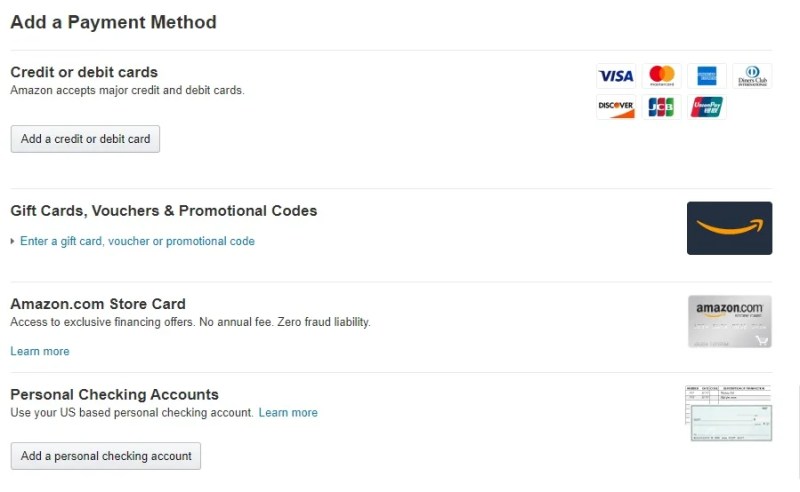
Troubleshooting Common Issues When Updating Payment Methods on Amazon
Updating or changing payment methods on Amazon is typically seamless, but users may encounter errors due to technical glitches, invalid credentials, or platform-specific restrictions. Below is a structured guide to diagnosing and resolving 10 frequent issues, along with a decision tree for quick troubleshooting. Differences in error resolution between desktop and mobile platforms are highlighted, along with actionable steps to ensure successful updates.
Common Errors and Step-by-Step Resolutions
Users often face obstacles when modifying payment methods, ranging from authentication failures to unsupported card types. The following list outlines the most encountered issues, their root causes, and systematic fixes. Each resolution is tailored to address both desktop and mobile discrepancies where applicable.Importance of Addressing These Issues
Failure to resolve payment method errors may result in transaction declines, account restrictions, or incomplete purchases. Proactive troubleshooting minimizes disruptions and ensures compliance with Amazon’s payment policies.
Error 1: Payment Method Not Updating
Symptoms
The system displays a confirmation message indicating the payment method was updated, but the changes do not reflect in subsequent transactions or account settings.Root Causes
Step-by-Step Fixes
1. Clear Browser Cache and Cookies
2. Use Incognito Mode or a Different Browser
3. Disable Browser Extensions
4. Verify Network Connection
5. Mobile-Specific Fix
Error Message Example (Desktop)
> "Your payment method was updated successfully, but changes may take up to 24 hours to reflect." > Resolution: Refresh the page after 5 minutes. If the issue persists, proceed to the next step.
Error 2: Invalid Card Details
Symptoms
Amazon rejects the card during submission with an error message such as "The card number or security code is incorrect" or "This card cannot be used."Root Causes
Step-by-Step Fixes
1. Re-enter Card Details Carefully
2. Verify Card Validity
3. Test with a Different Card
4. Complete 3D Secure Authentication
5. Desktop vs. Mobile Differences
Error Message Example (Mobile App)
> "This card cannot be used for purchases. Please try another payment method." > Resolution: Contact the card issuer to confirm if the card supports online transactions. If it does, re-enter the details and check for typos.
Error 3: Unsupported Payment Method
Symptoms
Amazon rejects the payment method with messages like "This payment method is not supported in your region" or "We don’t accept this type of card."Root Causes
Step-by-Step Fixes
1. Check Amazon’s Supported Payment Methods
2. Use an Alternative Card
3. Mobile App Workaround
4. Contact Amazon Support
Error Message Example (Desktop)
> "We don’t accept [Card Type] for purchases in [Country]. Please use a supported payment method." > Resolution: Add a Visa or Mastercard issued in your country. If unavailable, use a gift card (if eligible).Security Best Practices for Managing Payment Methods on Amazon
Amazon employs multiple layers of security to protect user financial data during payment method updates, including tokenization, end-to-end encryption, and two-factor authentication (2FA). Tokenization replaces sensitive card details with unique tokens, ensuring raw payment information is never stored or transmitted. Additionally, Amazon’s Secure Token Service (STS) dynamically generates tokens for each transaction, reducing exposure to fraud. Users can further enhance security by enabling Amazon’s built-in 2FA, which requires a verification code via SMS or authenticator apps before authorizing sensitive changes. These measures collectively mitigate risks such as unauthorized access, data breaches, and phishing attacks.
Amazon’s Security Measures for Payment Updates
Amazon’s security framework for payment methods integrates the following key protections:- Tokenization: Sensitive card data (e.g., CVV, full card number) is replaced with a one-time token during transactions, stored only in encrypted form. This ensures even if a database is compromised, raw payment details remain inaccessible.
Users should verify their account’s security settings align with these measures by navigating to Account Settings > Payment Options and confirming 2FA is active.
Checklist for Secure Payment Method Management
Adopting proactive security habits minimizes exposure to fraud. Below is a checklist of critical actions, along with the rationale for each:- Enable Two-Factor Authentication (2FA)
Two-factor authentication adds a secondary verification layer, significantly reducing the risk of unauthorized account access.
Steps: Go to Account Settings > Login & Security > Two-Step Verification and select SMS Code or Authenticator App.- Never Share CVV Codes or Full Card Numbers
CVV codes and full card numbers are single-use identifiers. Sharing them via email, messages, or unsecured websites exposes users to skimming or phishing.
Alternative: Use Amazon’s saved payment methods, where only the last 4 digits and card type are visible.- Log Out of Amazon After Updating Payment Methods
Public or shared devices retain session cookies, allowing unauthorized access if left logged in. Explicitly logging out prevents session hijacking.
Steps: Click the Account & Lists icon > Sign Out.- Use Unique, Strong Passwords for Amazon Accounts
Reusing passwords across platforms increases vulnerability. A strong, unique password (12+ characters, mixed case, symbols) thwarts brute-force attacks.
Tool: Amazon recommends using a password manager (e.g., Bitwarden, 1Password) to generate and store complex passwords.- Regularly Review Saved Payment Methods
Outdated or unused cards in the system pose risks if compromised. Removing them reduces attack surfaces.
Steps: Navigate to Account Settings > Payment Options and select Remove next to inactive cards.- Monitor Account Activity via Amazon’s Security Dashboard
Amazon’s dashboard provides real-time alerts for unauthorized logins, password changes, or new payment additions.
Access: Account Settings > Login & Security > Advanced Security Settings.- Avoid Public Wi-Fi for Payment Updates
Public networks lack encryption, making them prime targets for man-in-the-middle attacks where fraudsters intercept payment data.
Alternative: Use a VPN or mobile data connection for secure transactions.- Enable Alerts for Unusual Activity
Amazon sends email/SMS notifications for changes like new payment additions or address updates. Enabling these alerts ensures timely detection of fraud.
Steps: Account Settings > Login & Security > Contact Information > Update preferred notification methods.
Recognizing Phishing Attempts Targeting Payment Updates
Phishing attacks often mimic Amazon’s branding to trick users into divulging payment details. Below is a table outlining red flags in fraudulent communications:
Action if Phished:Red Flag Description Legitimate Amazon Practice Urgent Threats Emails claiming immediate action is required (e.g., "Your account will be suspended in 24 hours"). Amazon provides clear deadlines for actions but never demands rushed decisions. Suspicious Links Hyperlinks in emails that redirect to non-Amazon domains (e.g., "amazon-security-update.com"). Official Amazon links use "amazon.com" or "amazon.co.uk" without subdomains. Requests for CVV or Full Card Numbers Emails or calls asking for sensitive details "to verify your payment method." Amazon never requests CVV codes or full card numbers via email or phone. Poor Grammar/Spelling Errors Messages with typos or awkward phrasing (e.g., "Dear Valued Customer," instead of your name). Amazon uses personalized greetings (e.g., "Hello [Your Name]"). Unexpected Attachments Emails with attachments (e.g., "Payment_Update.pdf") claiming to contain security updates. Amazon communicates via in-app messages or secure links, never attachments. Unsolicited Calls or Messages Callers or messages from "Amazon Support" demanding payment details over the phone. Amazon initiates contact only via verified email or the Amazon app; never via unsolicited calls. Fake Login Pages Websites mimicking Amazon’s login page but with slight URL differences (e.g., "amazon-login-secure.com"). Always verify the URL starts with "https://www.amazon." and check for the padlock icon.
1. Do not click links or download attachments.
2. Report the email via Amazon’s phishing reporting tool.
3. Change passwords for Amazon and other accounts if credentials were entered.
4. Contact your bank to dispute unauthorized transactions.
Revoking Access to Saved Payment Methods
Users can remove or revoke access to saved payment methods to eliminate risks associated with outdated or compromised cards. Amazon allows two methods for removal:Method 1: Direct Removal from Account Settings
1. Navigate to Account Settings > Payment Options.
2. Locate the payment method under "Your Payment Methods".
3. Select "Remove" next to the card.
4. Confirm deletion in the prompt.Method 2: Contacting Amazon Customer Service
For users unable to access their account (e.g., due to suspected fraud), Amazon provides a dedicated fraud hotline:
Important Notes:
Regional Variations in Payment Method Updates on Amazon
Amazon’s payment infrastructure adapts to regional banking systems, local consumer preferences, and regulatory frameworks, resulting in significant variations in supported methods, user experience, and policy enforcement. While credit/debit cards remain dominant in North America and Western Europe, emerging markets leverage alternative payment systems (APS) like mobile wallets, bank transfers, or cash-based options. These regional distinctions influence not only the technical setup process but also compliance requirements, transaction limits, and customer support structures. Understanding these variations ensures seamless updates for users in high-traffic markets while mitigating risks such as failed transactions or regulatory non-compliance.Regional payment ecosystems reflect economic maturity, digital penetration, and trust in financial institutions. For instance, India’s Unified Payments Interface (UPI) integrates real-time bank transfers with biometric authentication, whereas Brazil’s Boleto Bancário relies on printed bank slips for offline verification. These differences necessitate localized guides, including language-specific error handling (e.g., Portuguese for Brazil, Hindi for India) and tailored troubleshooting for banking-specific issues like 3D Secure (3DS) failures or mandatory KYC (Know Your Customer) verifications. Below, the analysis covers unique payment methods by region, comparative user experiences, and localized workflows, supplemented by a reference table for quick access to regional policies.
Unique Payment Methods by Region and Their Setup Processes
Amazon’s supported payment methods vary based on regional availability, partnerships with financial institutions, and consumer adoption rates. Below are key examples categorized by geographic focus, including the technical steps required for setup and any prerequisites (e.g., bank account linkage, government-issued IDs).Europe: Digital Wallets and Local Bank Transfers
Latin America: Cash and Installment-Based Systems
Asia-Pacific: Mobile-First and Government-Backed Systems
Middle East and Africa: Cash and Prepaid Solutions
Comparative User Experience: Strict Regulations vs. Flexible Systems
Regional banking regulations directly impact the friction, security, and speed of payment method updates. Below is a comparison of user experiences in high-regulation environments (e.g., India, EU) versus flexible markets (e.g., US, Brazil).Key Factors Influencing UX:
Case Study: India’s UPI vs. US Credit Cards
Localized Challenges:Aspect India (UPI) United States (Credit Card) Setup Time 2–3 minutes (biometric + PIN) 1–2 minutes (CVV entry) Transaction Speed Instant (real-time) 1–3 seconds (3DS may add 20 sec) Fraud Protection Mandatory 2FA, transaction alerts 3DS, but higher chargeback rates User Drop-off Rate Low (familiar with UPI) Moderate (CVV fatigue) Regulatory Compliance RBI’s UPI guidelines, GDPR-like data privacy PCI DSS, but less strict on SMS OTP
Localized Step-by-Step Guides for High-Traffic Regions
Below are region-specific workflows for updating payment methods, including language considerations and common pitfalls. Guides are structured for first-time users and assume no prior technical knowledge.1. Netherlands: Adding iDEAL to Amazon.nl
2. Select "Add a Payment Method" and choose "iDEAL."
3. Enter your Dutch bank account details (IBAN/BIC auto-fills if linked to Amazon).
4. Verify eligibility: Amazon checks if your bank supports iDEAL (e.g., Rabobank does not).
5. Save and test with a small transaction (€1–€5) to confirm setup.
Leave a Comment
Comments are moderated before appearing. The data you submit is processed according to the Privacy Policy of www.linuxunplugged.com.