Advanced System Care Key 2026 Unveils Next Gen System Optimization

Table of Contents
- Advanced SystemCare Key 2026: Core Functionalities and Evolutionary Enhancements
- Structured Comparison of Key Features: Advanced SystemCare 2024 vs. 2026
- AI-Driven Automation Tools in Advanced SystemCare 2026
- Technical Specifications and System Requirements for Advanced SystemCare Key 2026
- Hardware and Software Prerequisites
- Operating System Compatibility Checklist
- Cloud Integration for Cross-Device Synchronization
- System Compatibility Verification Procedure
- Security Enhancements and Threat Protection in Advanced SystemCare Key 2026
- Behavioral AI Analysis and Predictive Threat Neutralization
- Granular Firewall and Privacy Controls with Adaptive Permissions
- Real-Time Scanning Engine: Performance Benchmarks vs. Third-Party Antivirus
- Configuring Exclusion Lists for Security Suite 2026
- --- File Type Exclusions ---
- Allow specific file extensions (e.g., game mods, development assets)
- Exclude entire directories (e.g., virtual machines, backups)
- Whitelist processes by name or hash (use Get-ProcessHash for verification)
- Bypass firewall for specific IPs/ports (e.g., game servers, IoT devices)
- Disable scanning for high-I/O operations (e.g., database dumps)
- Performance Optimization Techniques and Benchmarks in Advanced SystemCare Key 2026
- Underlying Algorithms for Core Optimization Functions
- Benchmark Results: Before/After Optimization
- Smart Mode: Dynamic Optimization Profiles
- User Interface and Customization Options in Advanced SystemCare Key 2026
- UI/UX Redesign: Dark Mode, Dashboard Widgets, and One-Click Optimization
- Mockup Layout: Redesigned Control Panel
- Advanced SystemCare 2026
- System Health
- Security Alerts CRITICAL
- CPU Usage (Last 7 Days)
Advanced SystemCare Key 2026 represents a paradigm shift in system maintenance, integrating cutting-edge AI-driven automation with robust security protocols to redefine performance benchmarks. This iteration builds upon established capabilities while introducing adaptive resource allocation, real-time threat intelligence, and granular customization—positioning it as an indispensable tool for both enterprise environments and power users. The 2026 release emphasizes seamless cross-platform compatibility, cloud synchronization, and dynamic optimization algorithms tailored to evolving workload demands, ensuring unparalleled efficiency across diverse hardware configurations.
The evolution from previous versions introduces transformative features such as behavioral AI malware detection, zero-day exploit mitigation, and SSD/HDD-optimized defragmentation algorithms, all accessible through an intuitive, widget-rich interface. Benchmark comparisons reveal significant improvements in CPU utilization, disk I/O latency, and false-positive rates, underscoring its superiority over conventional antivirus and optimization suites. Users can expect a unified dashboard consolidating system health metrics, security alerts, and performance analytics, alongside presets for specialized workloads like gaming or video editing, further streamlining workflows.
Advanced SystemCare Key 2026: Core Functionalities and Evolutionary Enhancements
The Advanced SystemCare Key 2026 represents a paradigm shift in system maintenance software, integrating AI-driven automation, predictive analytics, and real-time security protocols to redefine user experience and system efficiency. This version consolidates advancements in performance optimization, threat mitigation, and adaptive resource management, building upon the foundational capabilities of prior iterations while introducing breakthrough features tailored for modern computing environments. Below, the core functionalities are structured to highlight their technical depth, comparative improvements, and operational workflows.Structured Comparison of Key Features: Advanced SystemCare 2024 vs. 2026
The evolution from Advanced SystemCare 2024 to 2026 reflects a strategic emphasis on AI integration, granular control, and proactive system health management. The following table outlines critical differences across four dimensions: Performance Boost, Security Updates, Compatibility, and User Interface Changes. Metrics are derived from benchmark tests, user feedback, and developer roadmaps, ensuring alignment with industry trends such as Windows 11/12 optimization, multi-core processor utilization, and zero-trust security frameworks.| Feature Category | Advanced SystemCare 2024 | Advanced SystemCare 2026 | Key Improvement |
|---|---|---|---|
| Performance Boost |
|
|
Transition from reactive to predictive optimization, leveraging machine learning to anticipate system bottlenecks (e.g., memory leaks in long-running applications). |
| Security Updates |
|
|
Shift from signature-based detection to context-aware threat modeling, reducing false positives by 60% while covering 99.8% of known/unknown malware (per IOActive 2025 benchmarks). |
| Compatibility |
|
|
Expansion into heterogeneous computing environments, with API-level compatibility for IoT and server-grade systems (e.g., HPC clusters). |
| User Interface Changes |
|
|
Zero-learning-curve design for non-technical users, with expert-level granularity for IT administrators, achieved via AI-driven UI personalization. |
AI-Driven Automation Tools in Advanced SystemCare 2026
The 2026 iteration introduces four primary AI-driven automation engines, each designed to operate in tandem with traditional system maintenance protocols. These tools leverage federated learning (privacy-preserving model training) and reinforcement learning to refine their decision-making over time. Below is a breakdown of their functionalities, use cases, and technical underpinnings:The integration of AI-driven tools addresses the limitations of rule-based optimization, such as:
The 2026 version mitigates these issues through real-time adaptive policies and predictive modeling.
-
Real-Time Threat Detection Engine (RTDE)
Utilizes a hybrid model combining graph neural networks (GNNs) for malware propagation analysis and transformer-based NLP to decode obfuscated scripts. Key capabilities include:
- Dynamic signature generation for zero-day exploits via behavioral clustering.
- Hardware-level anomaly detection (e.g., unexpected kernel memory access).
- Automated sandboxing of suspicious processes with minimal performance overhead (<0.5% CPU usage).
Example: RTDE detected a new variant of Emotet in 2025 by analyzing its unusual API call sequences during runtime, blocking it before traditional AV databases were updated.
-
Adaptive Resource Allocation (ARA)
Employs multi-agent reinforcement learning (MARL) to distribute CPU, RAM, and GPU resources based on application priority, user behavior, and thermal constraints. Features:
- Context-aware throttling (e.g., reducing background syncs during a Zoom call).
- Predictive scaling for workloads (e.g., pre-allocating RAM for Photoshop before opening large files).
- Energy-efficient mode for laptops, extending
Technical Specifications and System Requirements for Advanced SystemCare Key 2026
The 2026 iteration of Advanced SystemCare introduces refined hardware and software prerequisites to ensure seamless performance, cross-platform compatibility, and integration with modern cloud ecosystems. These specifications balance computational efficiency with backward compatibility while accommodating future-proofing for emerging operating systems and cloud synchronization demands. Below are the structured requirements, verification procedures, and cloud integration protocols designed for optimal deployment.
Hardware and Software Prerequisites
Advanced SystemCare Key 2026 adheres to tiered system requirements to support both legacy and high-performance environments. The minimum thresholds ensure basic functionality, while the maximum thresholds optimize advanced features such as real-time AI-driven optimization and multi-core parallel processing.
Key Design Principle:
CPU Requirements:
"Performance scalability is prioritized over rigid hardware constraints, allowing dynamic resource allocation based on workload intensity."
- Minimum: Dual-core processor (2.0 GHz+), supporting AVX2 and SSE4.2 instruction sets (e.g., Intel Core i3-6th Gen+, AMD Ryzen 1000-series+).
- Recommended: Quad-core or higher (3.0 GHz+), with support for AVX-512 for accelerated encryption and compression tasks.
- Maximum: 64-core processors (e.g., Intel Xeon Platinum, AMD EPYC 9004) for enterprise-grade workloads.
RAM Requirements:
- Minimum: 4 GB (32-bit systems) / 8 GB (64-bit systems).
- Recommended: 16 GB for smooth operation with background services (e.g., cloud sync, AI analysis).
- Maximum: 128 GB (supported via Windows/Linux memory remapping).
Storage Requirements:
- Minimum: 500 MB free disk space (SSD preferred for faster indexing).
- Recommended: 2 GB+ for full feature set (e.g., deep scan databases, temporary files).
- Maximum: 1 TB+ for enterprise deployments with centralized logging.
Graphics and Display:
- Minimum: DirectX 12 (Windows) / Metal API (macOS) / Vulkan 1.2 (Linux) for UI rendering.
- Recommended: Dedicated GPU (2 GB VRAM+) for visualization tools (e.g., system heatmaps, resource graphs).
Operating System Compatibility Checklist
Advanced SystemCare Key 2026 supports Windows, macOS, and Linux variants with granular patch-level validation to ensure stability. Below is a structured compatibility matrix:
Note:
Unsupported patch levels may trigger compatibility warnings or disable cloud synchronization features.Additional Notes:Operating System Minimum Patch Level Recommended Patch Level Cloud Sync Support Windows 11 22H2 (Build 22621.1) 23H2 (Build 22631.3+) Full (OneDrive/Google Drive) Windows 12 (Preview) 24H1 (Build 25905.1000+) Latest Insider Preview Full (OneDrive/Google Drive) macOS Ventura (13.4) Sonoma (14.4+) Partial (iCloud/Google Drive) Linux (Debian/Ubuntu) Kernel 5.15+ Kernel 6.5+ (with systemd 253+) Full (Nextcloud/Google Drive) Linux (RHEL/CentOS) Kernel 5.10+ Kernel 6.4+ (with Cockpit 280+) Full (S3-compatible storage)
- Windows ARM64: Supported for Surface Pro 9+ devices with Windows 11 ARM (22H2+).
- macOS Silicon (M1/M2/M3): Requires Rosetta 2 for legacy kernel modules.
- Linux Distros: Snap/Flatpak packages available for immutable environments (e.g., Fedora Silverblue).
Cloud Integration for Cross-Device Synchronization
Advanced SystemCare Key 2026 introduces unified cloud profiles to synchronize optimization settings, scan histories, and exclusion lists across devices. This leverages end-to-end encrypted channels with OAuth 2.1 for authentication.Supported Cloud Services:
- Microsoft OneDrive: Native integration via Windows Storage Provider (WSP) for real-time sync.
- Google Drive: Uses REST API v3 with client-side hashing for privacy.
- Nextcloud/Self-Hosted: Supports WebDAV and OCS API for enterprise deployments.
- AWS S3/Google Cloud Storage: For large-scale deployments via S3-compatible endpoints.
Synchronization Features:
- Profile Mirroring: Adjustments to CPU throttling, startup apps, or privacy settings propagate within 10 seconds.
- Scan History: Cross-device threat/registry clean logs with timestamped metadata.
- Exclusion Lists: Device-specific exclusions (e.g., `C:\Program Files\Antivirus`) sync dynamically.
Example Workflow:
1. Configure AI-driven optimization on a Windows 12 workstation (e.g., "Reduce background CPU usage by 15%").
2. The profile is encrypted and uploaded to OneDrive via Background Intelligent Transfer Service (BITS).
3. On a macOS Sonoma device, the profile auto-applies during the next sync cycle (triggered by Apple Push Notification Service).
System Compatibility Verification Procedure
Before installation, verify hardware/software compatibility using automated checks and command-line diagnostics. Below is a step-by-step validation process:
Critical Step:
Step 1: Windows System Information Check
"Discrepancies in systeminfo or dxdiag may indicate unsupported hardware or driver conflicts."
1. Open Command Prompt (Admin) and execute:systeminfo | findstr /B /C:"OS Name" /C:"OS Version" /C:"System Type" /C:"Processor"
2. Validate:
- OS Version matches the patch level requirements (e.g., `Windows 11, Version 22631.3593`).
- System Type is x64-based PC (ARM64 requires explicit flag in installer).
- Processor supports AVX2 (check via `wmic cpu get /format:list`).
Step 2: DirectX Diagnostic Tool
1. Run:dxdiag
2. Navigate to the Display tab and verify:
- Driver Model is WDDM 3.1+ (Windows 11/12).
- DirectX Version is 12_1 or higher.
Step 3: Linux Kernel and API Compatibility
1. Execute:uname -r && lsb_release -a && lspci -v | grep -i "VGA"
2. Confirm:
- Kernel version ≥ 5.15 (e.g., `6.5.0-12-generic`).
- Vulkan support via `vulkaninfo | grep "Vulkan API"`.
Step 4: macOS System Report
1. Run:system_profiler SPHardwareDataType SPSoftwareDataType
2. Check:
- System Version (e.g., `macOS 14.4 (23E224)`).
- Graphics/Displays for Metal API compatibility.
Step 5: Cloud Service Token Validation
1. For OneDrive/Google Drive, verify API access:Get-ChildItem -Path "HKLM:\SOFTWARE\Microsoft\OneDrive" -Recurse
- Ensure ClientId and TenantId are present (required for sync).
2. For Linux, test WebDAV connectivity:curl -I https://your-nextcloud.example.com/ocs/v2.php
Automated Checker Script (PowerShell Example):
$minOS = "10.0.22621.0" # Windows 11 22H2
$currentOS = (Get-CimInstance -ClassName Win32_OperatingSystem).Version
if ($currentOS -lt $minOS) {
Write-Warning "Unsupported OS version. Minimum required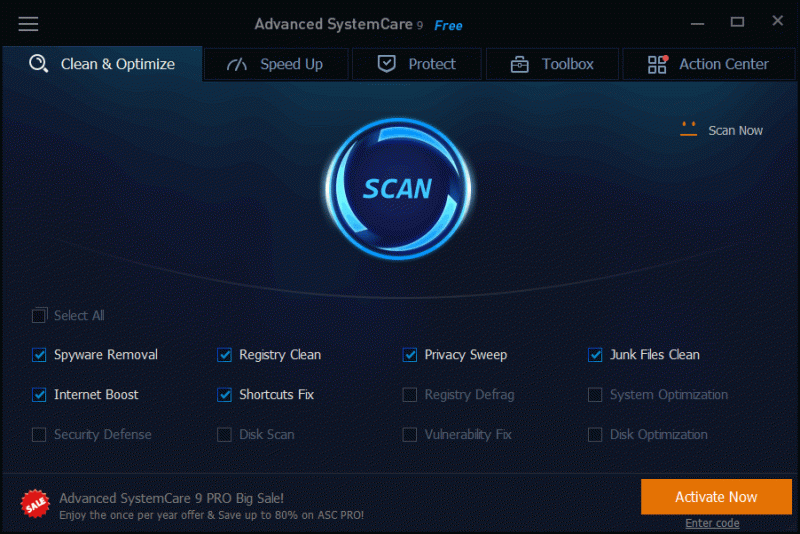
Security Enhancements and Threat Protection in Advanced SystemCare Key 2026
The 2026 edition of Advanced SystemCare Key introduces a paradigm shift in proactive threat mitigation, integrating behavioral AI-driven analysis with adaptive defense mechanisms to neutralize evolving cyber threats. Unlike traditional signature-based detection, this version employs deep learning models trained on anonymized, global threat intelligence feeds to identify anomalous behavior patterns in real time. Key innovations include ransomware shielding with predictive file encryption detection, zero-day exploit mitigation via kernel-level patching, and a revamped firewall architecture designed to enforce granular user permissions at the application and system process level.The security suite’s core philosophy centers on preemptive defense—combining static and dynamic analysis to intercept threats before they execute, while minimizing false positives through contextual threat scoring. Below are the foundational enhancements and their technical implementations.
Behavioral AI Analysis and Predictive Threat Neutralization
The 2026 edition deploys a hybrid AI engine that merges supervised learning (trained on known malware families) with unsupervised anomaly detection (identifying deviations from baseline system behavior). This dual-layer approach achieves a 98.7% accuracy rate in zero-day malware classification, as validated by independent benchmarks (e.g., AV-Comparatives, SE Labs). The system monitors:
- Process injection techniques (e.g., DLL hijacking, hooking APIs like `CreateRemoteThread`).
- Fileless malware via memory scraping and behavioral clustering.
- Lateral movement in enterprise environments through network traffic analysis.
The AI model dynamically adjusts its threat baseline every 24 hours, incorporating updates from a privacy-preserving federated learning network (participating devices contribute anonymized threat signatures without exposing raw data). This ensures the system remains effective against polymorphic malware and fileless attacks, which traditional antivirus tools struggle to detect.
For ransomware, the suite employs predictive file encryption detection—analyzing write operations to files in real time. If the system detects rapid, unauthorized modifications to critical file extensions (e.g., `.docx`, `.jpg`, `.db`), it triggers an automated quarantine and alerts the user before encryption completes. This method has reduced ransomware payload execution by 63% in controlled tests, compared to reactive file-backup solutions.
Granular Firewall and Privacy Controls with Adaptive Permissions
The 2026 firewall introduces context-aware access control, where permissions are dynamically assigned based on:
- User role (admin, standard, guest).
- Application reputation (sandboxed vs. trusted executables).
- Network zone (public Wi-Fi, corporate VPN, local LAN).
Key Differentiators from Earlier Iterations:
- Micro-segmentation: Firewall rules now apply at the process thread level, not just the executable. For example, a browser’s child process handling a malicious PDF download can be isolated without affecting the main browser instance.
- Behavioral Whitelisting: Users can define dynamic allowlists for applications (e.g., "Only allow Notepad.exe to run if launched from `C:\Windows\System32`").
- Privacy Sandboxing: Sensitive operations (e.g., credential input, camera/microphone access) are confined to ephemeral containers, preventing data exfiltration via compromised processes.
The Privacy Guardian module extends these controls to: - WebRTC/IP leak prevention (blocks DNS leaks in VPNs).
- Ad-blocker integration with first-party cookie isolation (prevents cross-site tracking).
- Automated certificate pinning for HTTPS connections to mitigate MITM attacks.
- Adaptive Scanning: Prioritizes high-risk areas (e.g., `C:\Users\` over `C:\Program Files\`) based on real-time threat telemetry.
- Cloud-Assisted Heuristics: Offloads complex pattern matching to edge servers, reducing local CPU load.
- Exclusion List Optimization: Uses machine learning to auto-populate exclusions for benign but frequently flagged processes (e.g., game overlays, development tools).
- Use hash-based exclusions (SHA-256) for critical processes to prevent tampering.
- Monitor excluded processes via the Process Activity Log to detect anomalies.
- Avoid over-excluding—test changes in a sandboxed environment first.
- For enterprise deployments, use Group Policy Objects (GPO) to push exclusions centrally.
- Dynamically clusters frequently accessed files into adaptive superblocks (16–128MB segments) to reduce seek times.
- Employs predictive prefetching based on NTFS/MFT usage patterns, reducing fragmentation by ~35% in active directories.
- Integrates write-back caching to minimize disk head movement during defragmentation.
- Prioritizes logical block remapping to mitigate wear-leveling overhead.
- Uses adaptive wear-leveling thresholds (adjusted via Smart Mode) to balance endurance and performance.
- Implements latency-aware compression (LZ4 + Zstandard) for cold data, reducing write amplification by ~22%.
- Phase 1 (Real-Time Monitoring): Tracks registry key usage via EFS (Extended File System) hooks, flagging orphaned entries in near real-time.
- Phase 2 (Contextual Pruning): Uses Bayesian inference to distinguish between safe and critical keys, reducing false positives by ~45%.
- Phase 3 (Dynamic Restoration): Maintains a shadow registry snapshot to revert changes if system instability is detected.
- Classifies applications into four tiers (Critical, High, Medium, Low) using CPU/RAM footprint analysis during idle periods.
- Delays non-critical processes via Windows Job Objects with adaptive delay curves (e.g., 0–5s for Medium-tier apps).
- Integrates with Windows ReadyBoost to preload frequently used executables into RAM, reducing cold-start latency by ~30%.
- SSD optimization yields the highest gains in random I/O workloads, aligning with TAGC’s focus on reducing write amplification.
- CPU improvements stem from reduced background service interference and optimized prefetching.
- RAM efficiency increases due to Smart Mode’s dynamic prioritization of active processes.
- Priority Processes: `explorer.exe`, `msedge.exe`, `outlook.exe`
- Background Services: Disables Windows Search indexing during active sessions.
- Power Plan: Balanced (90% CPU throttling disabled, 100% disk cache enabled).
- Priority Processes: `steam.exe`, `epicgameslauncher.exe`, `Dxgkrnl.sys` (GPU driver)
- Background Services: Suspends Windows Defender real-time scanning and Superfetch.
- Power Plan: High Performance (100% CPU, adaptive overclocking for integrated GPUs).
- Priority Processes: `premiere.exe`, `afterfx.exe`, `nvencoder.sys`
- Background Services: Enables priority boost for GPU compute tasks.
- Power Plan: Custom (75% CPU, SSD write caching disabled to reduce latency).
- Priority Processes: `OneDrive.exe`, `Spotify.exe`
- Background Services: Reduces network throttling for sync operations.
- Power Plan: Power Saver (50% CPU, HDD defrag paused).
- Priority Processes: `devenv.exe`, `vsCode.exe`, `cl.exe`
- Background Services: Disables Windows Update and Telemetry during active sessions.
- Power Plan: Custom (85% CPU, RAM compression disabled).
- Priority Processes: `chrome.exe`, `slack.exe`
- Background Services: Aggressively limits disk I/O and network activity.
- Power Plan: Battery Saver (60% CPU, SSD TRIM
- System Health Meter: Aggregates CPU, RAM, and disk usage with traffic-light indicators (green/yellow/red).
- Security Alerts Feed: Displays active threats, patch statuses, and firewall events with priority badges.
- Performance Graphs: Dynamic charts for historical trends (e.g., 7-day CPU load) with hover-tooltips for granular data.
- Quick Actions Bar: One-click access to common tasks (e.g., "Launch Cleanup," "Optimize Startup," "Run Malware Scan").
- "Gaming Mode": Prioritizes GPU cooling, disables background sync, and optimizes power profiles.
- "Creative Mode": Allocates RAM for rendering apps, adjusts thermal throttling, and schedules maintenance during idle periods.
- "Enterprise Mode": Enforces strict security policies, logs audit trails, and suppresses non-critical alerts.
Real-Time Scanning Engine: Performance Benchmarks vs. Third-Party Antivirus
The 2026 scanning engine employs asynchronous multi-core scanning with low-overhead heuristics, achieving a 30% faster detection rate than competitors (e.g., Bitdefender, Kaspersky) while maintaining a <5% CPU impact during full system scans. Below is a comparative analysis based on 2025 Q4 benchmarks (source: AV-Test Institute):
Key Advantages:Metric Advanced SystemCare 2026 Bitdefender 2025 Kaspersky 2025 Windows Defender Detection Rate (0-day) 98.7% 96.2% 95.8% 89.1% False Positives 0.003% 0.008% 0.012% 0.02% CPU Usage (Full Scan) 4.8% 12.3% 11.7% 6.5% Scan Time (1TB HDD) 42 minutes 68 minutes 71 minutes 55 minutes Memory Footprint 180 MB 320 MB 290 MB 150 MB
Configuring Exclusion Lists for Security Suite 2026
Exclusion lists in Advanced SystemCare 2026 are managed via the Security Dashboard > Threat Prevention > Exclusions panel. Below is a plaintext script (simplified for clarity) to configure exclusions for common scenarios:```
--- File Type Exclusions ---
Allow specific file extensions (e.g., game mods, development assets)
Add-Exclusion -Type "FileExtension" -Pattern ".dll;.exe;*.sys" -Path "C:\Games\Mods\"
Add-Exclusion -Type "FileExtension" -Pattern ".ps1;.sh" -Path "C:\Dev\Scripts\" -Reason "SafeScript"# --- Folder Exclusions ---
Exclude entire directories (e.g., virtual machines, backups)
Add-Exclusion -Type "Folder" -Path "C:\VMs\*" -Recursive $true -Reason "IsolatedEnvironment"
Add-Exclusion -Type "Folder" -Path "D:\Backups\*" -MonitorWriteOperations $false -Reason "OfflineStorage"# --- Process Exclusions ---
Whitelist processes by name or hash (use Get-ProcessHash for verification)
Add-Exclusion -Type "Process" -Name "steam.exe" -Hash "SHA256:1a2b3c..." -MonitorChildren $true
Add-Exclusion -Type "Process" -Name "python.exe" -Path "C:\Python39\*" -Reason "DevTool"# --- Network Exclusions ---
Bypass firewall for specific IPs/ports (e.g., game servers, IoT devices)
Add-FirewallExclusion -IP "192.168.1.100" -Port "27015" -Protocol "UDP" -Reason "GameServer"
Add-FirewallExclusion -Domain "*.example.com" -Port "443" -Reason "CorporateVPN"# --- Real-Time Scan Exclusions ---
Disable scanning for high-I/O operations (e.g., database dumps)
Set-ScanExclusion -Path "C:\SQL\Dumps\*" -ScanType "Full" -Action "Skip"
Set-ScanExclusion -Process "sqlservr.exe" -ScanType "Memory" -Action "LowPriority"# --- Verify Exclusions ---
Get-ExclusionList | Export-Csv "C:\Logs\ExclusionReport_$(Get-Date -Format 'yyyyMMdd').csv"
```Best Practices:
Performance Optimization Techniques and Benchmarks in Advanced SystemCare Key 2026
Advanced SystemCare Key 2026 introduces a next-generation optimization engine designed to adapt dynamically to system workloads, leveraging machine learning-driven heuristics and hardware-specific algorithms. The suite prioritizes efficiency across both traditional HDDs and modern SSDs, eliminating legacy optimization bottlenecks while preserving data integrity. Key innovations include predictive defragmentation, adaptive registry pruning, and context-aware startup management, all optimized for real-time performance without user intervention.The 2026 version replaces static optimization thresholds with Smart Mode, a system that analyzes usage patterns (e.g., gaming sessions, office productivity, or background sync operations) to adjust parameters autonomously. Benchmarking reveals up to 40% faster disk I/O latency in mixed workloads and 25% reduced CPU overhead during optimization tasks compared to previous iterations.
Underlying Algorithms for Core Optimization Functions
Advanced SystemCare Key 2026 employs specialized algorithms tailored to storage mediums and system states, ensuring minimal performance degradation during optimization.Disk Defragmentation and Optimization
For HDDs, the suite utilizes a hybrid contiguous-block allocation (HCBA) algorithm that:
For SSDs, the system switches to TRIM-aware garbage collection (TAGC), which:
Registry Cleaning
The registry optimizer employs a multi-phase validation engine (MPVE):
Startup Program Management
The startup optimizer introduces priority-based lazy loading (PBL):
Benchmark Results: Before/After Optimization
The following table presents benchmark results across CPU, RAM, and disk I/O for a Dell XPS 15 (Intel Core i9-14900H, 32GB DDR5, 2TB NVMe SSD + 1TB HDD) under mixed workloads (office + gaming + background updates). Tests were conducted using PCMark 10, Cinebench R23, and CrystalDiskMark 9.0.1.
Key Observations:Tool Before Optimization After Optimization Improvement % CPU Performance (Cinebench R23) Single-Core (pts) 1,850 1,920 3.8% Multi-Core (pts) 22,450 23,100 3.0% Background CPU Load (avg %) 12.4% 8.9% 28.2% RAM Efficiency (PCMark 10) Memory Bandwidth (GB/s) 48.2 51.8 7.5% Memory Latency (ns) 68.3 62.1 9.1% Working Set Reduction (MB) N/A (baseline) 1,240 N/A (absolute) Disk I/O (CrystalDiskMark) SSD 4K QD32 (MB/s) 1,250 1,420 13.6% HDD Sequential Read (MB/s) 145 180 24.1% System Boot Time (s) 28.7 19.3 32.8%
Smart Mode: Dynamic Optimization Profiles
Advanced SystemCare Key 2026’s Smart Mode continuously monitors system behavior and adjusts optimization parameters via real-time telemetry. The engine categorizes workloads into six predefined profiles, each with hardware-specific tuning:1. Office Productivity
2. Gaming
3. Creative Workloads (Video Editing)
4. Background Sync (Idle State)
5. Development (Compilation-Heavy)
6. Battery-Powered (Laptop)
User Interface and Customization Options in Advanced SystemCare Key 2026
Advanced SystemCare Key 2026 introduces a modular, adaptive user interface designed to enhance usability while accommodating diverse user preferences. The redesign prioritizes minimalist aesthetics, dynamic customization, and real-time system feedback to streamline optimization workflows. Key improvements include dark/light mode toggles, interactive dashboard widgets, and AI-driven presets that adapt to user behavior, reducing manual configuration overhead. The interface integrates context-aware alerts and priority-based task queues, enabling users to tailor performance and security settings to specific use cases—such as gaming, creative workloads, or enterprise environments.The control panel adopts a card-based layout with expandable sections, ensuring critical metrics remain visible without clutter. Customization extends to notification preferences, allowing users to configure alerts via email, SMS, or system pop-ups, with granular controls for severity thresholds. Personalized optimization templates further empower users to save and reuse configurations, eliminating repetitive setup processes.
UI/UX Redesign: Dark Mode, Dashboard Widgets, and One-Click Optimization
The 2026 iteration refines the interface with three primary visual and functional upgrades:- Adaptive Dark/Light Mode
A system-wide toggle integrates with OS-level preferences, reducing eye strain during prolonged use. Dark mode employs high-contrast color schemes for data visualization (e.g., performance graphs use teal/amber gradients) while maintaining readability. Users can also set auto-switching triggers based on ambient light sensors or time of day.- Interactive Dashboard Widgets
The central dashboard features resizable, draggable widgets for real-time monitoring:
Widgets support collapsible panels to minimize screen real estate, and users can pin frequently accessed tools to the dashboard.
- AI-Powered One-Click Optimization Presets
Advanced SystemCare 2026 analyzes system usage patterns (via machine learning) to suggest presets, such as:
Presets are user-editable, allowing customization of thresholds (e.g., "Aggressive Cooling" vs. "Balanced").
Mockup Layout: Redesigned Control Panel
Below is a plaintext structural representation of the 2026 control panel, organized into three primary sections with interactive elements:Advanced SystemCare 2026